Popcorn


I never realized how descriptive the word ‘popcorn’ is until I heard it in Spanish: ‘Pochoclo’. I laughed out loud, saying “Literally, it means ‘pop’ ‘corn’!” Immediately obvious was that ‘popcorn’ does also.

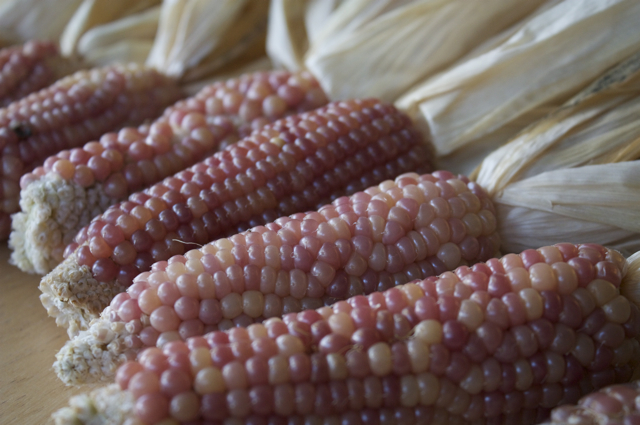
Last summer I grew popcorn. Territorial Seed Company offers an ‘Early Pink Corn‘. True to its word, it was early (for our impossibly late and cool summer) and it was pink.
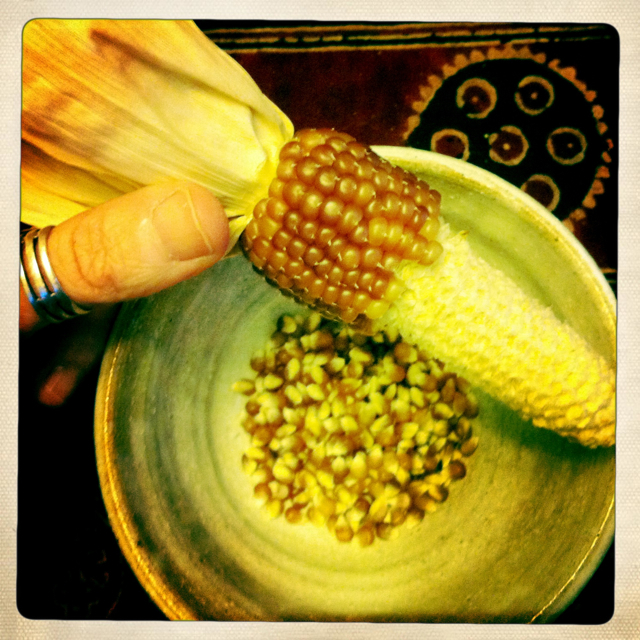

Raccoons got the best of the crop, but what was left I dried in a paper bag in my closet. Last month I pushed each small, shiny kernel from its cob, collecting nearly two cups from perhaps eight small cobs.
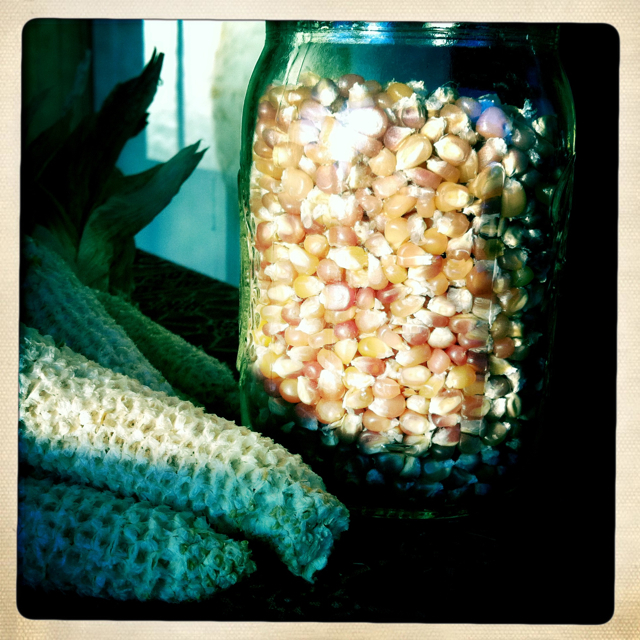

Popped, they are small, white, and tasty; the kernel shell less obtrusive than ‘regular’ popcorn. I decided it was worth the effort. With more vermin vigilance, I will attempt to better grow popcorn in 2011.
Posted in corn, food | Leave a comment

Harbinger of Spring


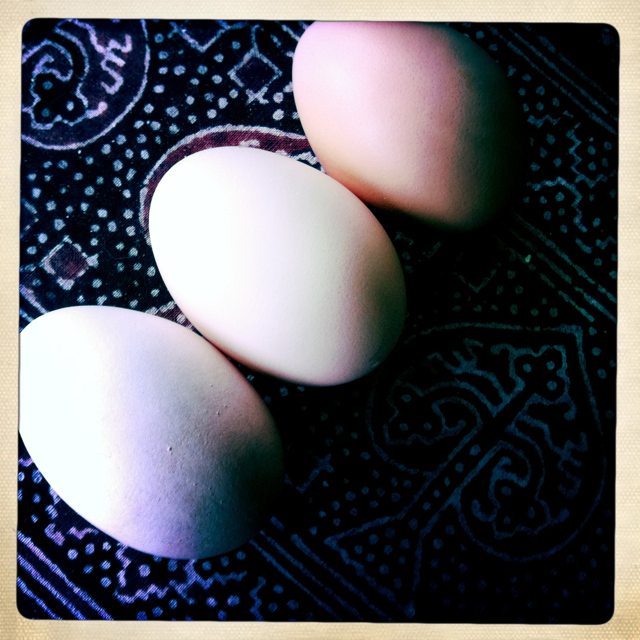
Perhaps this is truly spring; when our hens start laying again. That’s right, today, for the first time since late fall, each of our lovely hens sat in the box and produced one beautiful, perfect egg apiece.

Last winter was hard – Greta and Baracka took the winter off to moult. Stolid Rocky kept at it, but it was meager – the reduced daylight meant she only lay about 3 per week. Breakfast was sometimes a matter of merit – “Who gets the egg today?”.

So we roll with it. We eat fewer eggs in the winter, becoming more accustomed to warm oatmeals and dense granolas. But we miss the eggs. Don’t get me wrong – we have not been completely without The Egg. This winter has been better. The girls took a much shorter vacation and I have rejoiced in that. But today was the first time this year that there were three in the box.

Hail The Coming of Spring…!

Posted in chickens, eggs, spring | Leave a comment

Green Mango


I mostly eschew food that travels more than a few hundred miles to my table. Sometimes this is difficult because I want a grapefruit or I want an avocado, and there is one – right there! But I have been learning that waiting for the freshest foods pays off in flavour and nutrition. The early-picked, well-traveled grapefruit is absolutely nothing like the ones my grandfather would send us fresh from his tree in February. Tomatoes grown out of season halfway around the world are usually hard, grainy, pale, and always tasteless. Not worth the price or the carbon.

These are my exceptions:

The occasional, good-looking avocado from Mexico. I won’t indulge in ones from off-continent, but sometimes a Mexican aguacate makes its way in to my basket in winter. What’s a girl to do? It would be rude not to eat it sliced with scrambled eggs or chilaquiles.

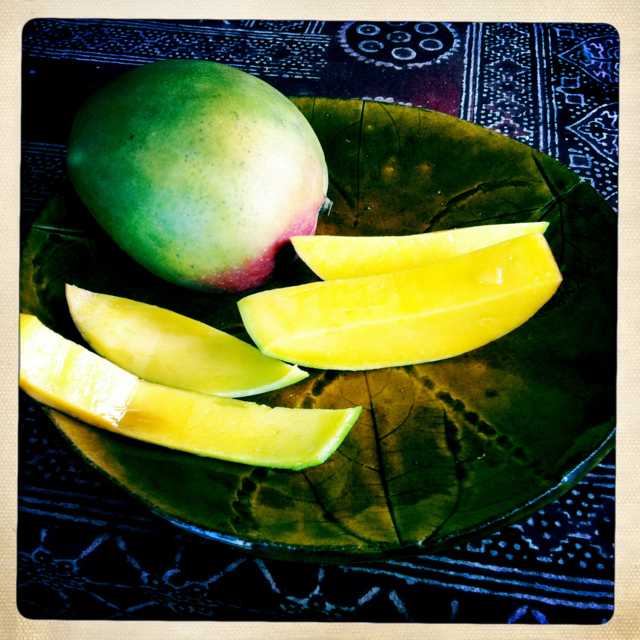
The Green Mango. This one stems back from my days at University sharing the Lower Union house with CJ, Karishma, Siobhan, and Rahat. I learned that although I do not care for ripe mangoes, with their sticky-sweet, fibrous pulp, I love green mangoes that have not yet developed their texture or sweetness. The flesh is like butter and some sour remains. YUM. I can smell these mangoes at the store where, yes, I am that lady furtively smelling the fruit.

Here is the poem I wrote way back in 1996 after that first mango shared with Rahat in a dark wintry kitchen in Kingston, Ontario.

Green Mango

Green mango
Ripe enough to eat
The colour of summer inside

Now summer is inside us
A secret we beam
Against the relentless cold
Of a slow slow spring.

Posted in food, fruit, Sustainability, winter | 1 Comment

Creamy Goat Milk Soap


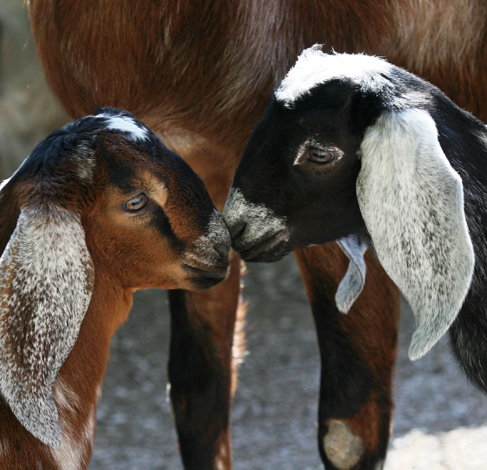
The city of Seattle allows some types of small farm animals to be kept on urban lots, including pot-bellied pigs, miniature goats, and chickens.

Last spring I sold soap at a Goat Festival put on by Sustainable NE Seattle to benefit Seattle Farm Co-op. One of the goats had recently been treated with antibiotics. When the goat herdess extraordinaire offered me the ‘tainted’ milk for making soap, I was eager to make the attempt.

As I have described previously, cold-process soap is made by adding lye dissolved in water to a mixture of warmed oils (about 100F). When goat milk is substituted for water, the extra fat from the milk lends an extraordinary creaminess to the resulting soap.

The unique challenge with goat milk soap is preventing the milk sugars from caramelizing. Dissolving lye is a highly exothermic reaction (heat-producing). Usually the lye-water mixture is placed in a cold water bath during dissolution to help the mixture cool down faster (and avoid melting any plastic containers!).

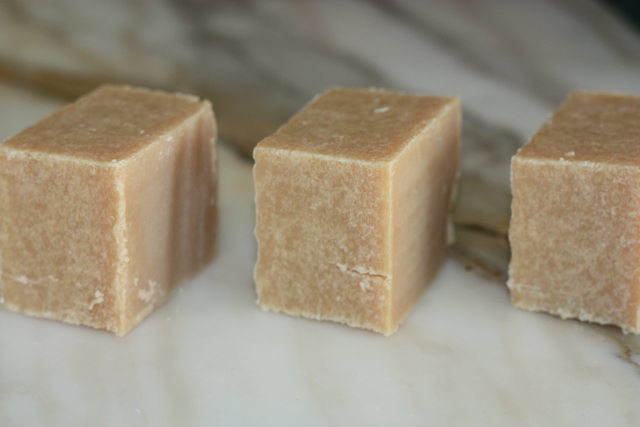
To avoid the caustic-orange of burned sugars, I froze the goat milk in appropriate-sized batches (42 oz for 120 oz of soap) and tried dissolving the lye in a goat milk slush on soap day. The mixture still turned orange, but the final bars are a lovely tan.


I have been really impressed with this soap. It is extraordinarily creamy, but leaves your skin feeling fresh. Particularly excellent in the winter!

Posted in DIY, homemade soap, soap | 2 Comments