Considering Clays for Homemade Ollas

Winter 2012: Ollas ready for planting

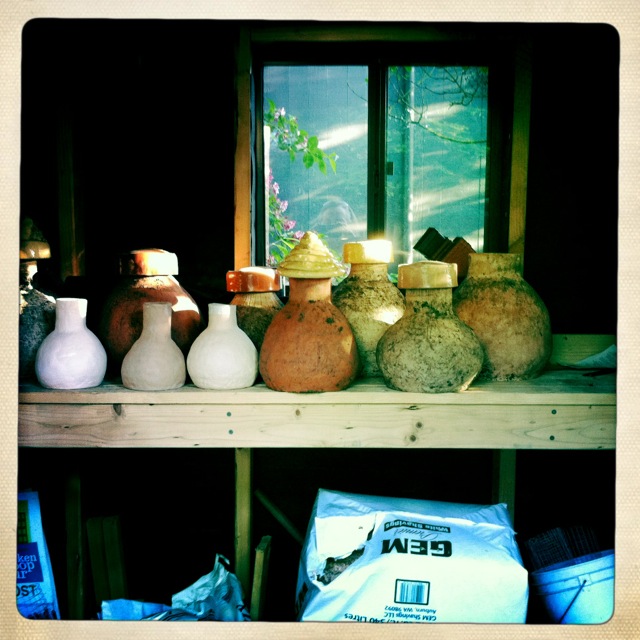
I have made 15 ollas now from 5 clay types, all fired at ‘bisque’ temperatures (cone 06 ~ 1000 degC); Akio, Sculpture Buff, Red Art, Red Art with Sand, Brown Terracotta. The Red Art ollas are beautiful, but became vitreous – they hold water instead of seeping it.  The other 4 clay bodies ‘work’ – in that they are porous and water the roots of nearby plants.

The first ollas are enormous. Number 1, the dinosaur egg, has walls nearly 1″ thick and consumed an entire bag of Akio clay.  I keep those first two planted year-round.  Later ollas are smaller and smaller. I can now make a 10# bag of clay last 3-4 ollas; smaller, faster, thinner.
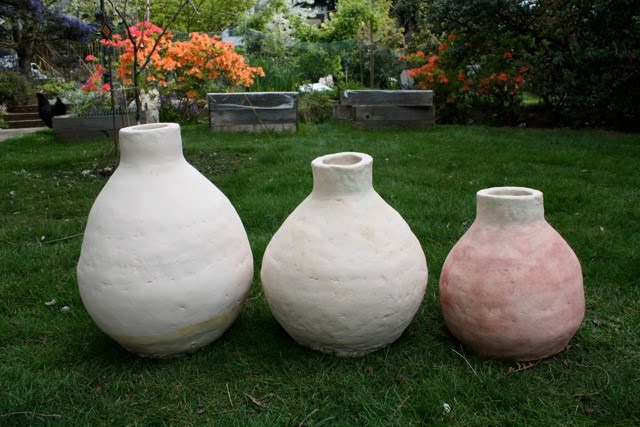
First Akio and Sculpture Buff ollas
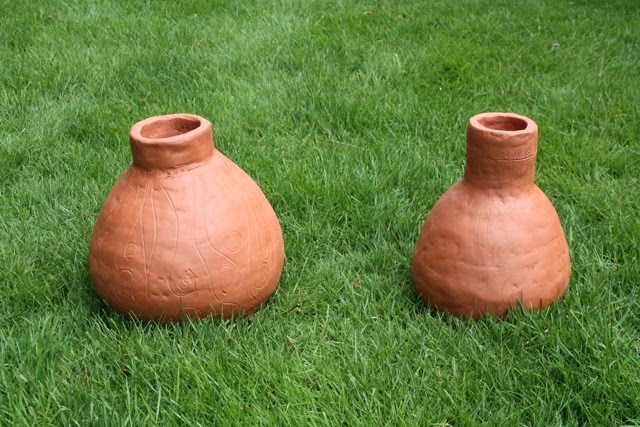
Red Art with Sand ollas
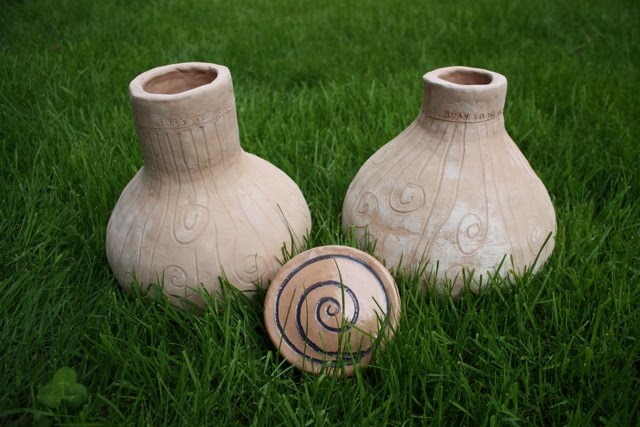
Brown Terracotta ollas

This spring I used an extruder at the ceramics studio to make a delicate olla; large, but with walls 3/8″ thick. Using the extruder saved time making coils, but the wet clay needed time to dry as the pot grew.
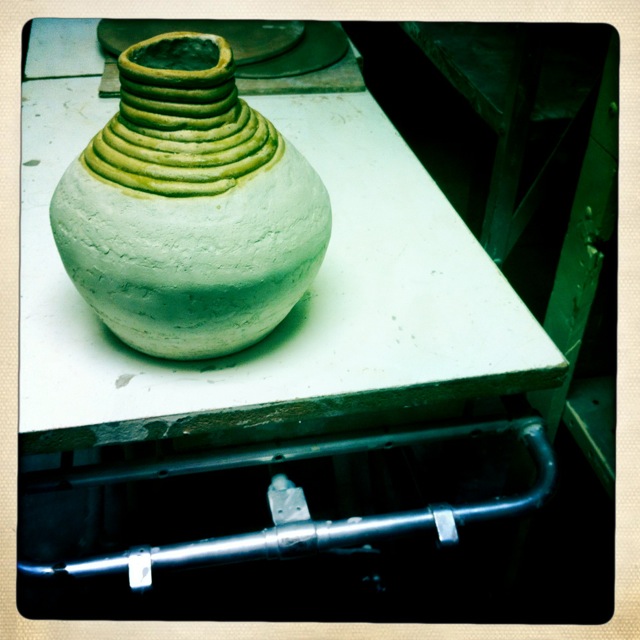
Lightest, thinnest olla yet. Green is wax to slow dry the coiled neck

Despite my intentions, I did not make enough ollas to ‘go around’ this spring. I chose to use most of the ollas on two garden rows; tomatoes + tomatillos and cucumbers + squashes. I used the largest ollas for the tomatoes, planting four to an olla. The smallest ollas – that I intended to plant in large pots of carrots (next year…) – got used for tomatillos; two per olla. Finally, I decided to do right by the squash family this year. The medium-sized ollas will feed only two plants each.
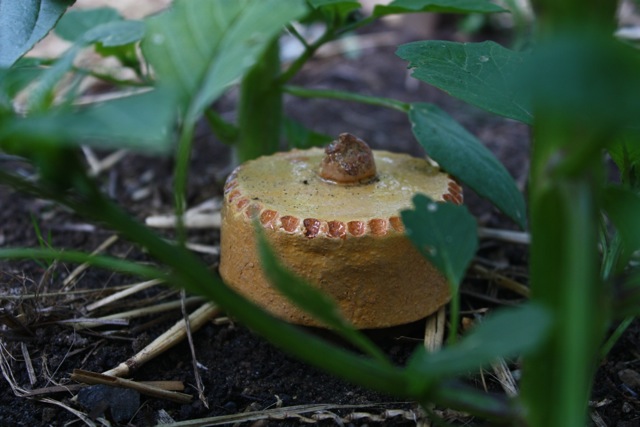
Small olla (showing lid) feeding two tomatillo plants

With so many sizes and clay types, it has been difficult to determine which ollas work best. What I have noticed so far is that the brown terracotta ollas empty first. They are more porous. What remains to be seen is whether plants do better with a more porous olla. There are still so many factors; location, plant type, plant variety, climate. This year I will follow the success of the plants fed by the brown terracotta ollas on the curcurbits, tomatoes, and tomatillos compared to those plants fed by the less porous ollas to determine whether or not brown terracotta clay should be used to make new ollas.
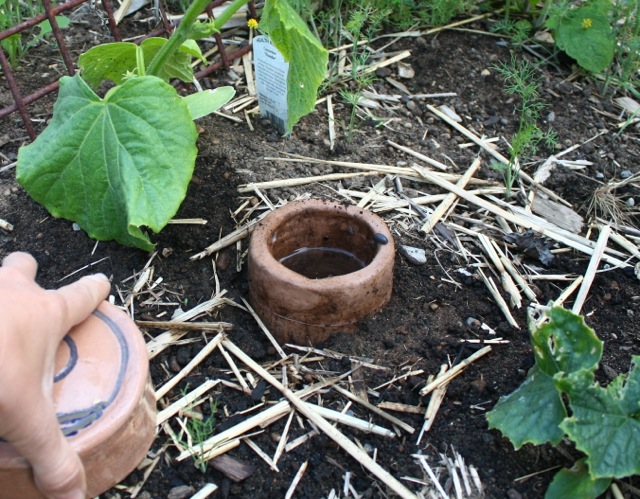
Brown terracotta olla feeding two cucumber plantlets
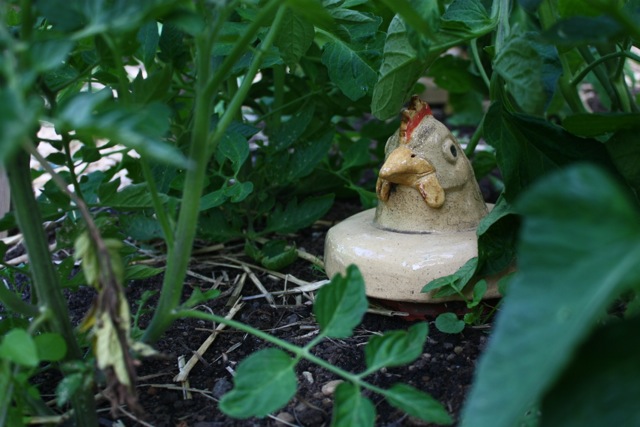

Chicken-lidded olla pokes its beak out through its four tomato plants

Puget Sound Residents: I will be teaching a class in March on hand-building ollas!
Posted in cucumber, olla irrigation, rain, squash, tomatillos, tomatoes, vegetable garden | Tagged , , , , | 4 Comments

Where is my mom??

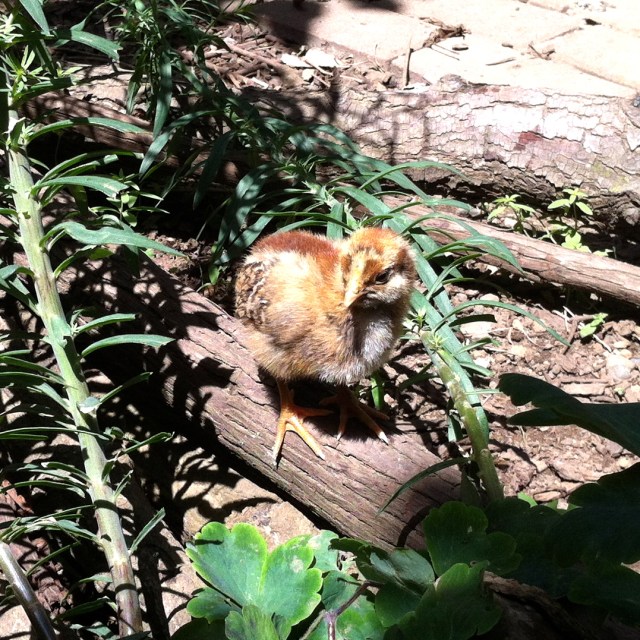
As the chicks grow, they range further from their mom. Sometimes one realizes she is alone. When this happens, I get to see one of the really cool things about watching a hen raise chicks (as opposed to raising them yourself in a cardboard box) – instinctive parenting.

Baby chick stays put and calls out – louder and louder: cheep cheep cheep Cheep Cheep CHEEP CHEEP CHEEP! CHEEP! CHEEP!

Momma hears this cheeping and makes her own calls: Cluck Cluck Cluck! Cluck! Cluck! She has been making this sound since before they were born, so they know it means Mom. And, they find each other. It has been fascinating to watch how Calamity Jane responds to these desperate cries. She will eventually become frantic if the CHEEPing continues and she cannot get to the chick.

This morning a downpour hit us. I was outside closing up the shed and checking on the cisterns, so I went to see how the chickens were faring. CJ had wisely taken shelter in the covered run. The two Red chicks were with her. Very close by, but on the other side of the hardware cloth, was Lavender. Cheep cheep cheep, as she paced back and forth, her wee beak knocking against the fence. It amazes me how the chickens will do this, as if expecting that on the next pass the barrier will have evaporated.

I began to think, I Should Help. So I looked around for a stick that I could use to coax little L out of her awkward spot along the back fence and into the opening of the run. But, by and by, when I look again there she was next to her mom and sibs.

Chickens are Not Very Bright, but they are bright enough for what they need to do.

Posted in baby chickens, broody hen, chickens, rain | Tagged | 6 Comments

When baby chicks get cold

Baby RooRoo at 7 days old


When the chicks were two days old, Momma Hen decided their confinement was over. Contrary to my imaginings of Calamity Jane herding the chicks out for the first time under the shelter of her warm wings, when I opened the door she simply strolled out. After a few minutes (during which time the chicks had their first interactions with the Big Bad Hens), I noticed the wee Lavender was out there with her. How did she sneak out??

One minute later I saw a frantic Red peeping up against the chicken wire. She poked her head through and then, with a shake and a squeeze, she was through! LOL. The other Red found her way around the door and they were all reunited. They walked around for a bit, Momma demonstrating some scratching and pecking techniques.

Momma was seriously interested in taking a bath after several days locked up with her chicks. She chose a less-than-ideal spot in damp dirt because of the overhead protection from the cascading weigela. It was not a warm day. By now the chicks were getting a bit chilly and their instinct to burrow into her warm feathers took over:

Another few minutes and they all retired to the nest box for a snuzzle (that’s a snuggly snooze).
So freakin’ cute!

Posted in baby chickens, broody hen, chickens | Tagged , , | Leave a comment

Auntie tries to put chick in her place

Given that the hens had killed the previous chicks when they were helpless hatchlings, I was nervous about their interaction this time around. I didn’t know how long to keep the hens isolated from the chicks. I imagined Momma would take the chicks on their first outing when they were several days old, that she would shelter them under her wings and protect them from the Big Bad Hens if needs be.

But, as with many things chicken, it simply happened. When the chicks were 2 days old, I went out to visit. I unlocked the door and crouched in the opening to observe and film their adorableness. Momma decided to go out for a spell since the door was open. I appointed myself guardian.

Other hens wandered in to peck at the food. I figured a hen couldn’t kill a chick in one strike, so I took deep breaths and watched. Peck peck goes the hen at the big-chicken feeder. Cheep cheep go the little chicks in the nest box. Then Rooroo, the Boldest-But-Not-Brightest, decided to investigate. Hop hop and (s)he’s down with Baracka:

I am loving watching real chicks do their thing. Our previous two experiences were raising chicks in a box until they were big enough to go outside. The first time there were no hens to worry about. The second time, we had to integrate the young pullets (and cockerel, as it turned out) with the full-grown hens; an experience with prolonged trauma for the younger.

This time the chicks get to do it the natural way. Momma is around to protect them, but the hens will get used to these small creatures before they become a serious threat to their pecking order. That will come later…

Posted in baby chickens | Tagged , , | 3 Comments