How Soap Works

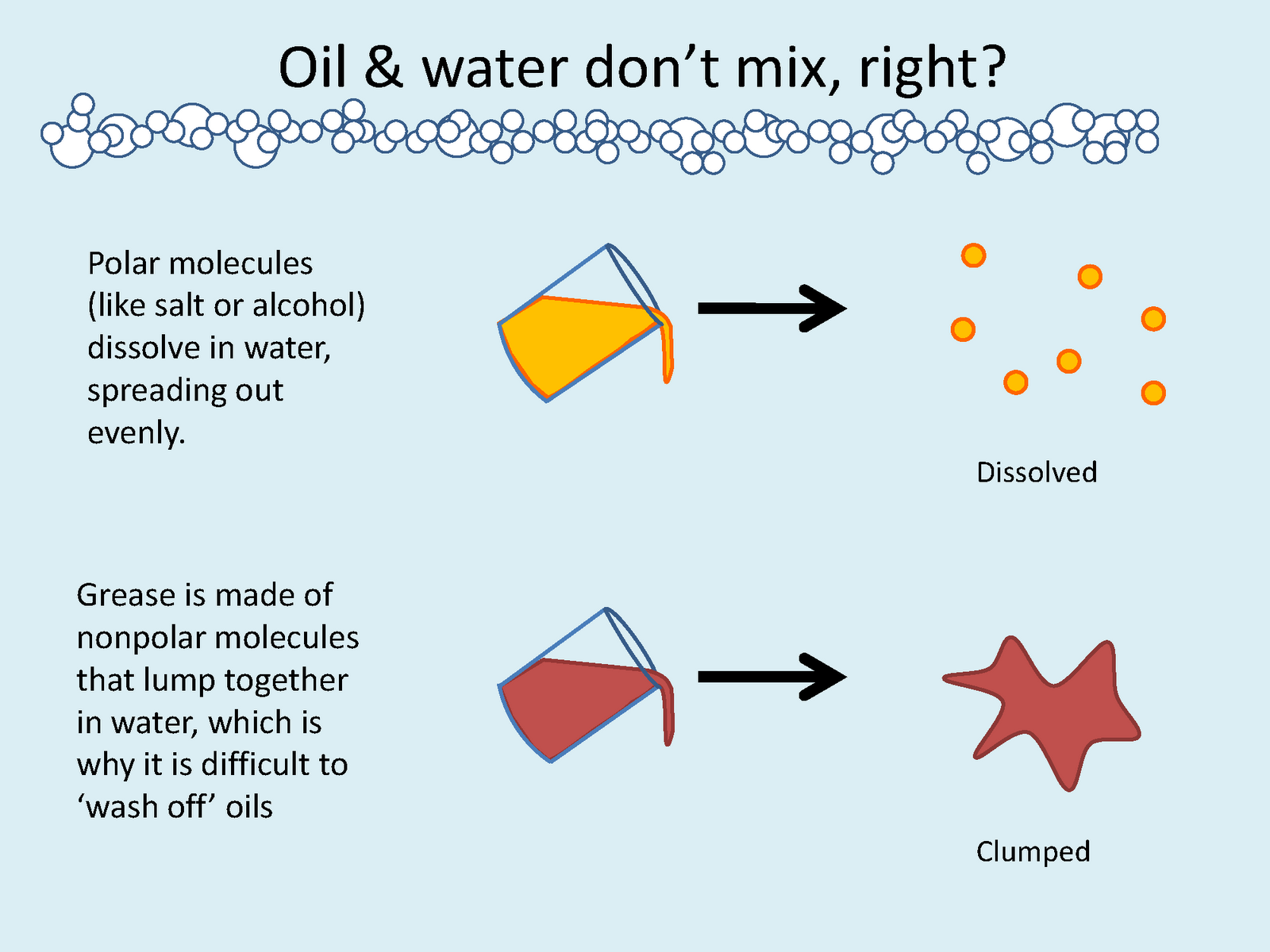
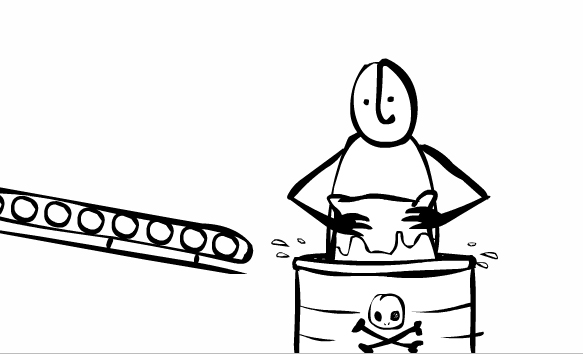
The reason we need soap is that we wash our clothes, dishes, and bodies with water. Most ‘dirt’ is greasy from oils coming off our skin and food. Even if you’ve never studied chemistry you will have heard that oil and water do not mix. Water is a polar molecule which means it has a positively-charged end and a negatively-charged end. When other polar molecules (like alcohol) are put in water, all the positive ends and negative ends are attracted to each other like little magnets and so the two substances mix. Molecules, like oil, that are nonpolar don’t have charged ends. When they are put in water they try to avoid all the little magnets and lump together.

Soap is a special molecule. One end of the soap molecule is charged (polar) while the other end is not charged (nonpolar). What happens when soap is added to water is that the polar end seeks out water and the nonpolar end seeks out other nonpolar molecules like oils. The soap molecules dig their nonpolar tails into the grease while their polar heads are being little magnets with the water molecules, making a ball called a soap micelle. In this way, soap carries grease in water even though the grease itself cannot dissolve in water!

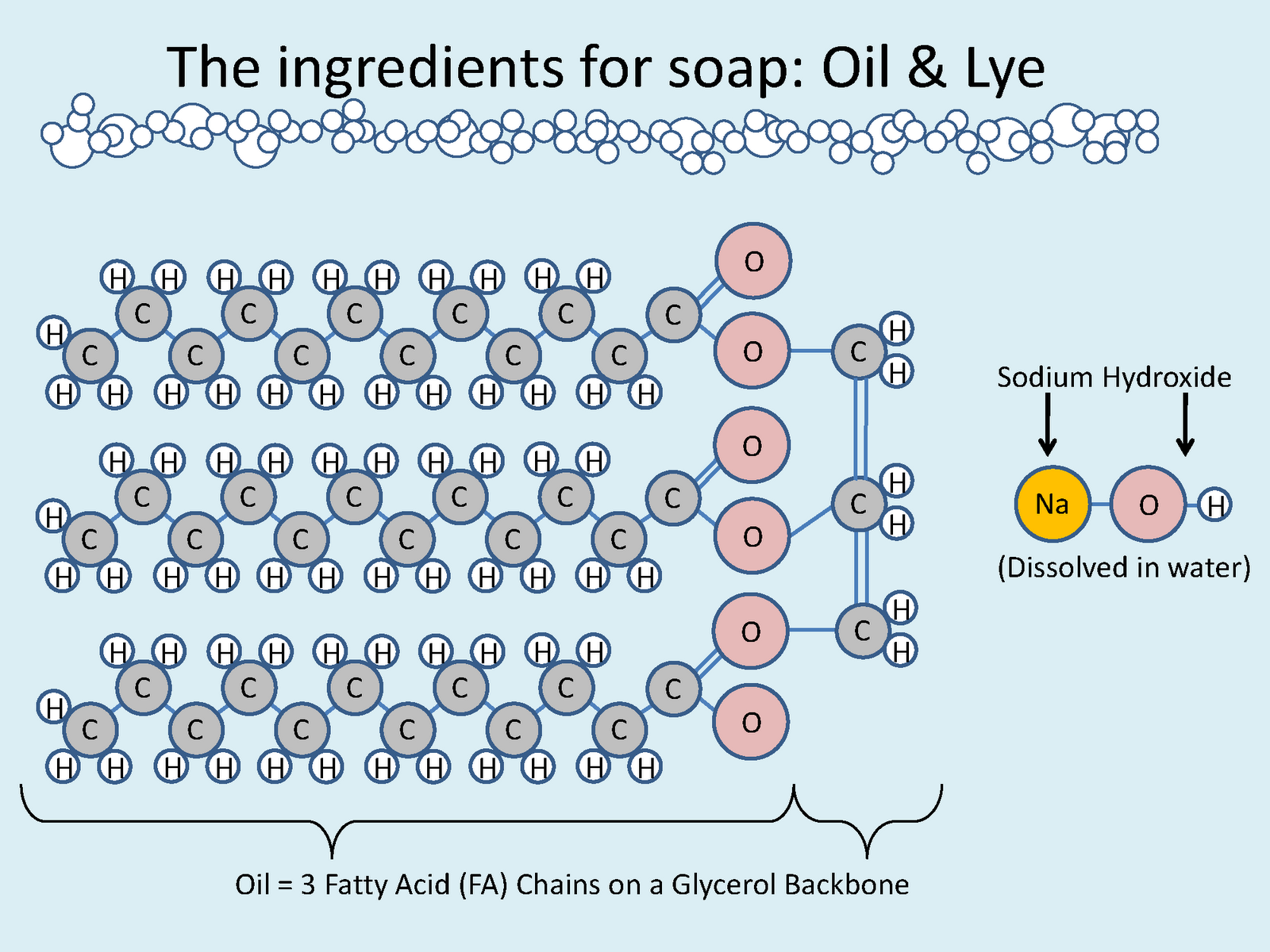
I made this little tutorial to explain it pictorially – let me know if it helps!


Posted in education, Scientific, soap | 5 Comments

Soap-du-jour


With Scott away at his crag course in Leavenworth, I wondered what to do with my weekend? Early Saturday morning, I drank tea and read from the anthology of Nature Writings. I watched the birds play and hunt in the water out my window. I wrote in my journal. I de-thawed some raspberries and ate them with granola and pecans and milk (yum). And then I decided to make soap. We were nearly out of the soap I’d made in November and I didn’t know when I’d have time again this spring. So, out went my relaxing, non-committal weekend of leisure. To my spreadsheets, my notebooks, and the internet – to decide upon the how-much and what-needs and when-how of my second-ever batch of soap!

I decided to make a triple batch, varying the flavours of soap from the previous batch but sticking to the same basic recipe so as not to change too many variables at once (that’s a good-scientist thing, though hard to stick to). I still had most of the basic oils I needed (coconut, palm, castor, olive), bought in bulk in November, but would need to buy again the expensive and luxurious vit-E-rich wheat germ oil as well as various essential oils for flavouring my batches. Of course, once in Zenith picking up my supplies, I couldn’t resist adding beeswax to my recipe as they had leftovers for sale.

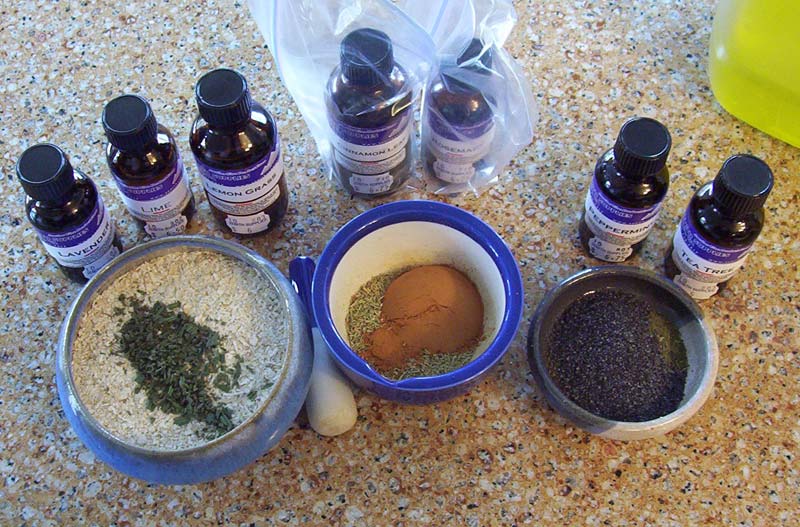
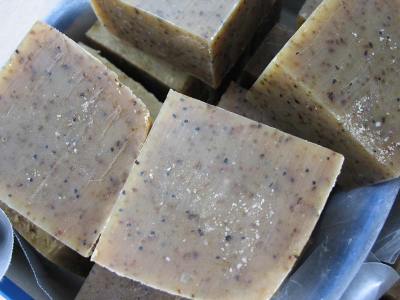
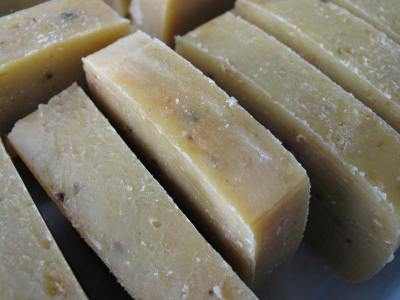
For this batch, I wanted to try peppermint-tea tree with poppy seeds and a lemongrass-lavender with oatmeal and a touch of lime. I also decided to make again the cinnamon-rosemary, ‘cause we both loved it and I had leftover essential oils. At home Saturday evening I double checked my calculations and prepped all my flavours – measuring out poppy seeds and crushing dried peppermint leaves, grinding oats, and chopping fresh lavender and rosemary.
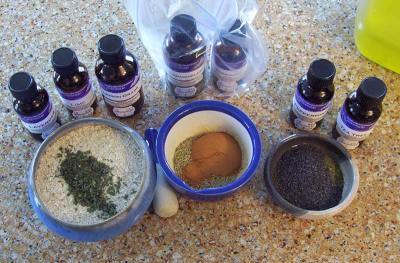
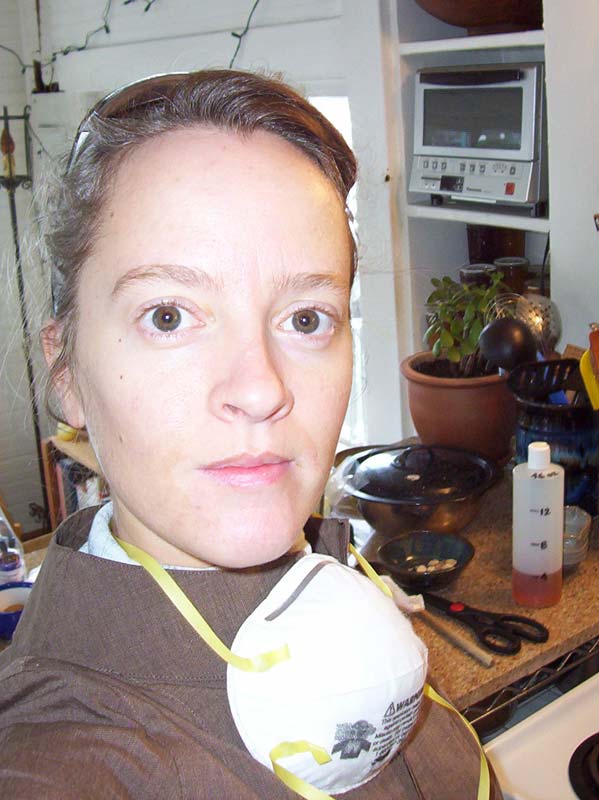
Sunday morning I lay down a dirty sheet on the kitchen floor, got out my balance and my pots, jugs, thermometer, and bowls, and began. Wearing a facemask, sunglasses, and gloves, I weighed lye and water, made the lye solution, and placed it in a cold water bath. Then the arduous task of weighing oils to melt on the stove. This actually is not that arduous at all except that the largest component of the recipe, coconut ‘oil’, is a hard solid below 76 F and quite difficult to scoop out of its container. Only afterwards, watching it melt on my hands, did I consider that I could have warmed it first.

Another surprise was that beeswax has a quite high melting point, compared with the other oils in the recipe. It doesn’t melt until 150 F which I just hoped wasn’t above the boiling point of the other oils. It wasn’t. When at last the beeswax was all melted, I had a clear brown oil in my ‘cauldron’, as I began to think of it. Of course it had taken me so long to scoop out the infernal coconut oil, and what with the beeswax needing such a high temperature to melt, my lye solution was now cooler than the oils. I improvised a hot water batch for the lye solution, resting the plastic jug on rocks in a pot of water that I brought to near-boiling.

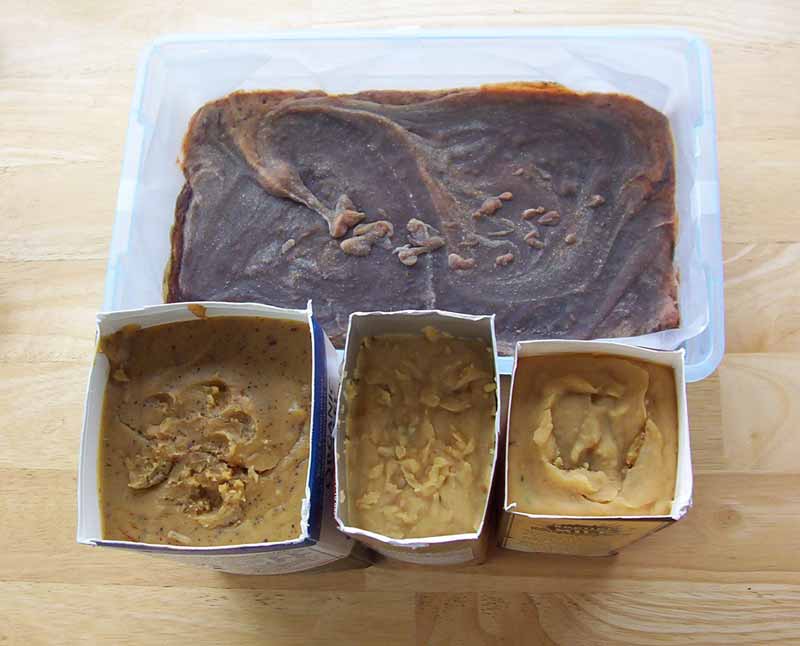
When the temperatures matched(ish), I poured the lye slowly into the oils, stirring. As they mixed, the solution turned yellow and opaque and began to thicken. I loved knowing that the oils were saponifying; sodium from the lye was attacking the triglycerides, removing the three fats from their glycerol backbone, making soap and glycerin. (Blah Blah blah blahblahblah, for you non-science-types). Within 15 minutes, the soap had ‘traced’ (you have to experience it to know it) and then it was crunch-time. This particular recipe sets relatively quickly and my adrenaline raced as I poured the still-saponifying oils into 3 bowls and began mixing in the respective fragrances and herbs. I worked quickly but when I ‘poured’ the third bowl’s contents into the molds after just a few minutes, it was more like pouring mashed potatoes than gravy. For molds I used a wax paper lined Tupperware box and tetrapaks from milk and chicken soup stock.

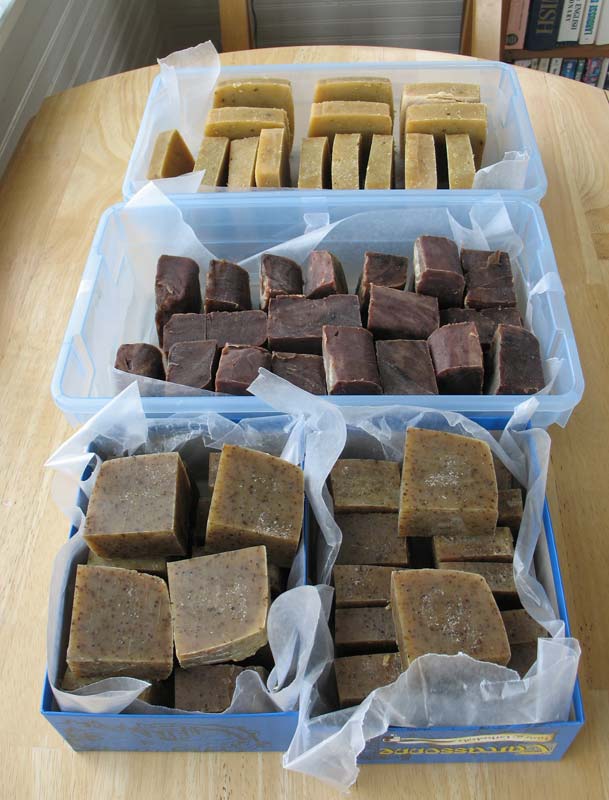
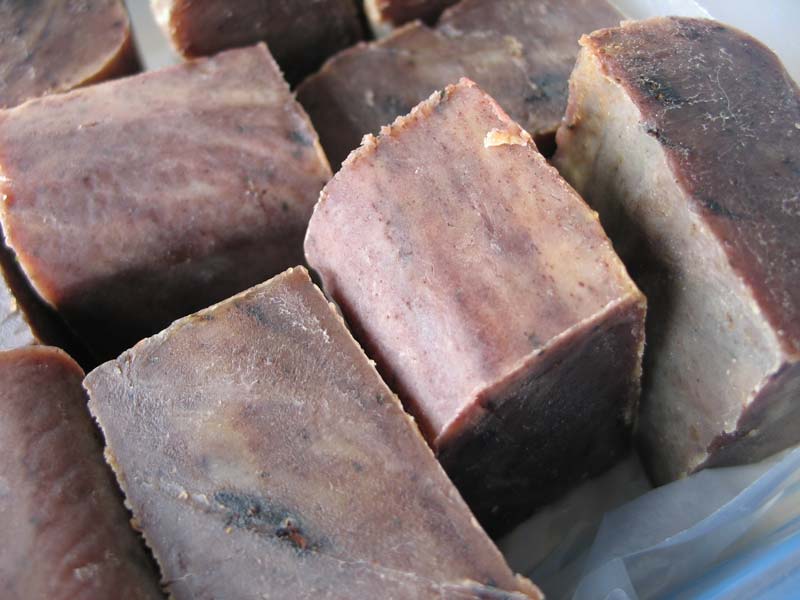
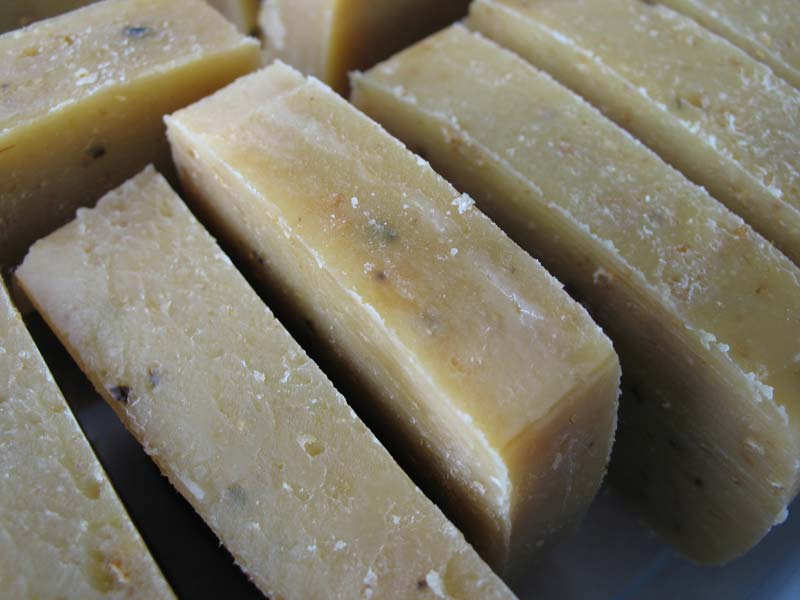
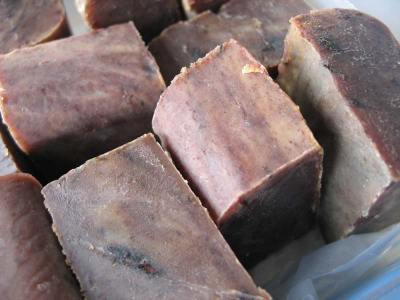
After dinner and a movie the soap smelled lovely and was ready for unmolding. I peeled the wax paper off the first soap block and then tore the cartons from the second and third batches (invest: exacto knife). I so enjoy cutting soap into bars. The soap at the end of the day is the consistency of cool fudge – you need a heavy hand to push the knife through the block, then you pry it off with a careful twist on the blade. And it’s so pretty and smells so good. I cut 62 bars, making my average cost/bar = about 98 cents. Not bad at all.
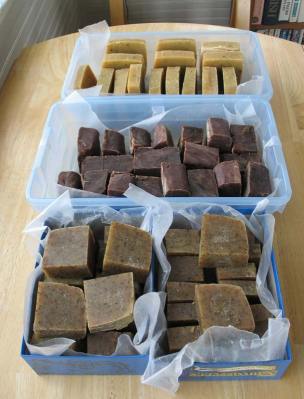
It took me about 3 hours all-told to prep, make, and clean up. I was a little pooped afterwards but it was utterly satisfying to see my little bars all lined up, curing atop the bookcase. During the next 4-6 weeks, the soap will get harder and the pH will drop towards neutral as the lye is fully used up reacting with oils to create soap and glycerin molecules. When I use the soap at first it’s special, and I admire each bar that I pull out of the cupboard. Later it’s just soap – it smells good, has good texture, and I know what’s in it cause I made it myself.

Cinnamon-rosemary
Peppermint-tea tree oil with poppy seeds
Lemongrass-lavender with lime, oatmeal and fresh lavender
Posted in DIY, homemade soap, Scientific, soap | 2 Comments

Turning the earth into functional art

I love to make things with my hands – drawing, carving, knitting, apple pie. ing. I love ceramics ’cause they’re earthy, functional, traditional, and sustainable. Plus – it’s something you can make yourself from clay – I mean, how cool is that? People have been doing this for thousands upon thousands of years. And you can do it too! (But you don’t have to – support a local potter instead if you have other passions to follow!)

Let me walk you through throwing a bowl (or a cup or a mug, or even a plate, if you’re really talented). Take a lump of clay and pat it into a sphere. Plop it on a spinning wheel and throw your body down on top of it. By this I mean hunker over the wheel and push against the clay with your whole body, forcing it up and out into the shape you want. (OK, most amateur potters would agree that you don’t necessarily have all the say – sometimes the clay has its own idea of what shape it should take and, try as you might, you can’t convince it otherwise).

It is both easier and harder than you might think to throw a bowl. It is easy because the clay wants to move and all you have to do is shape it as it moves. It is hard because it takes a surprising amount of strength and concentration. It is also a wonderful mental space in which to be – a meditation of sorts – zone in on the clay and breathe.

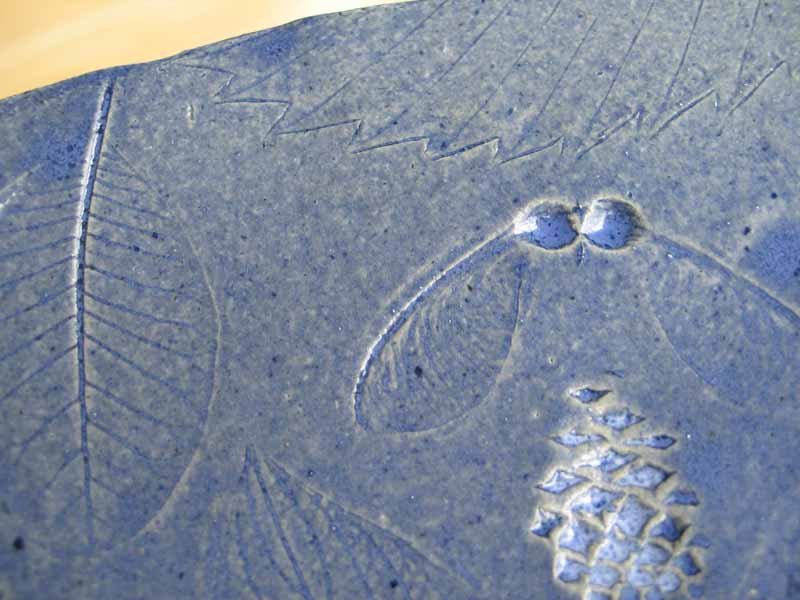
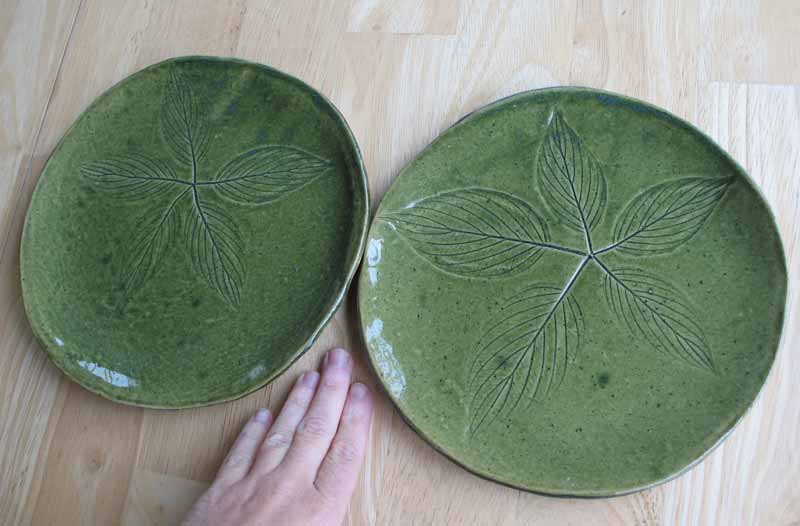
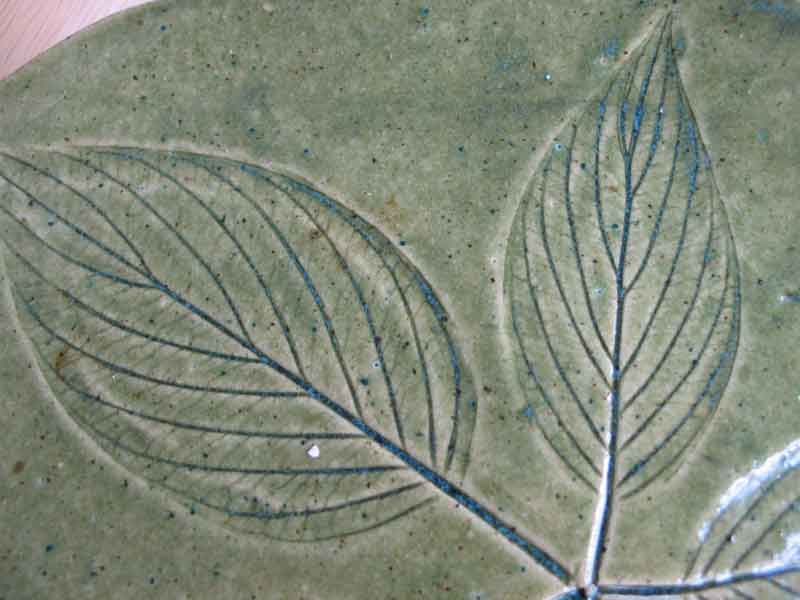
These are pieces from the end of last quarter when I was hand-shaping using leaf, seed, and cone impressions. I look forward to doing more of this when these objects are again at hand!


These are the first pieces from this winter quarter.
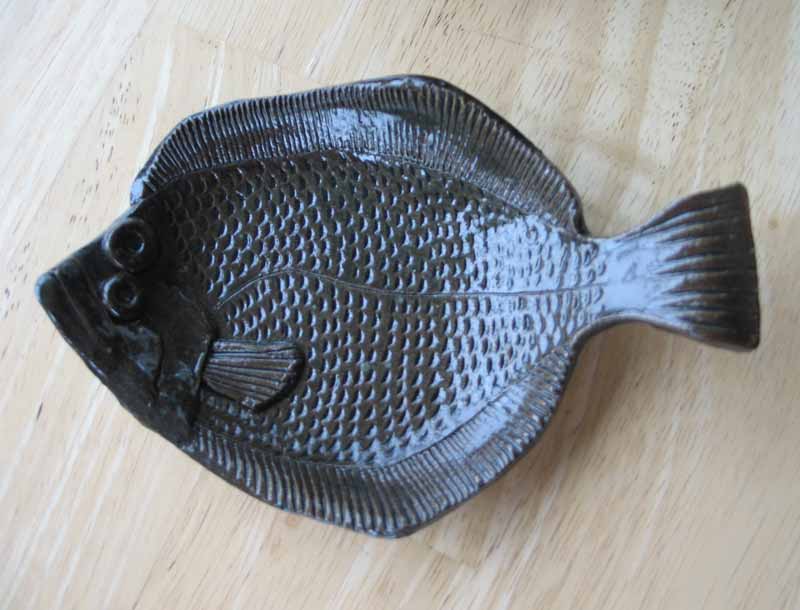
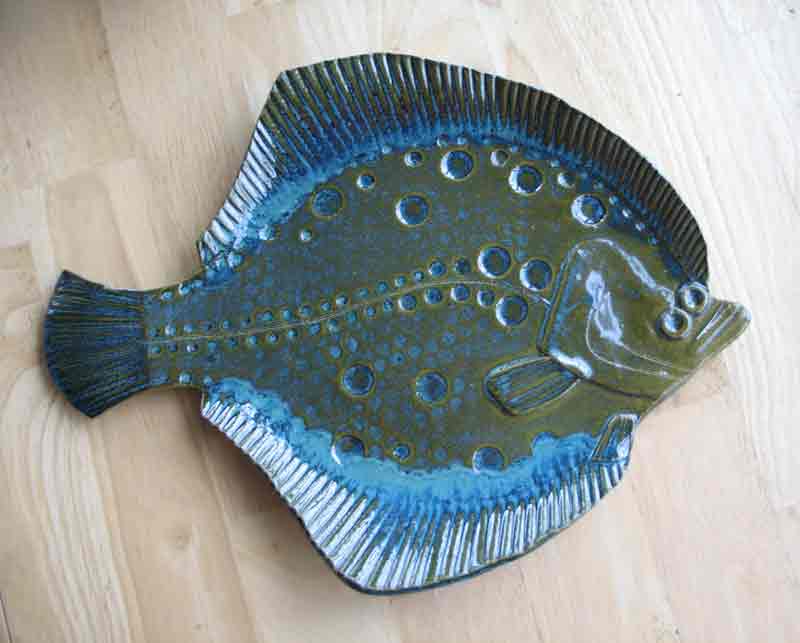
The ongoing flounder project (first one is hand-sized, second is platter):


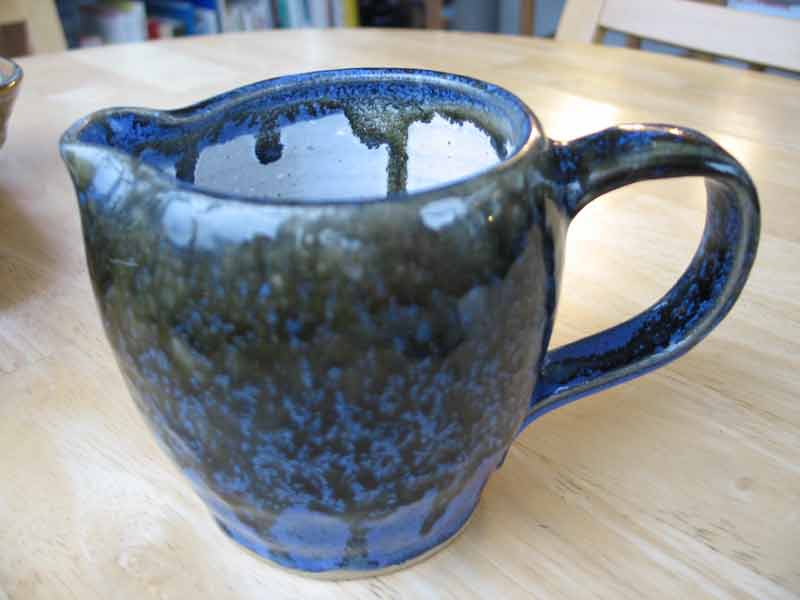
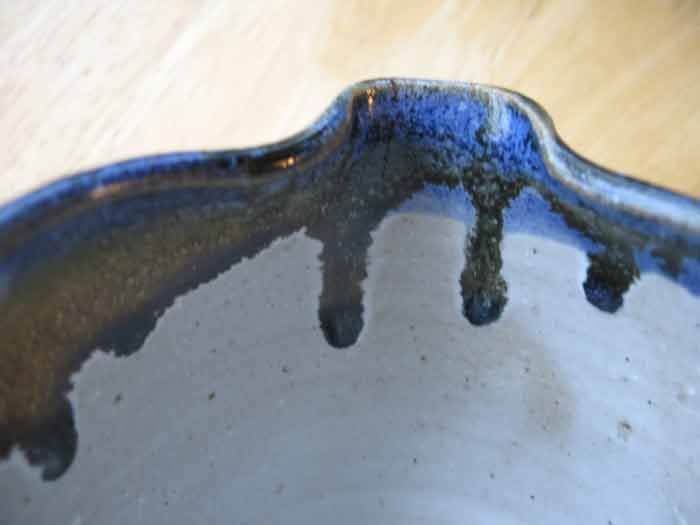
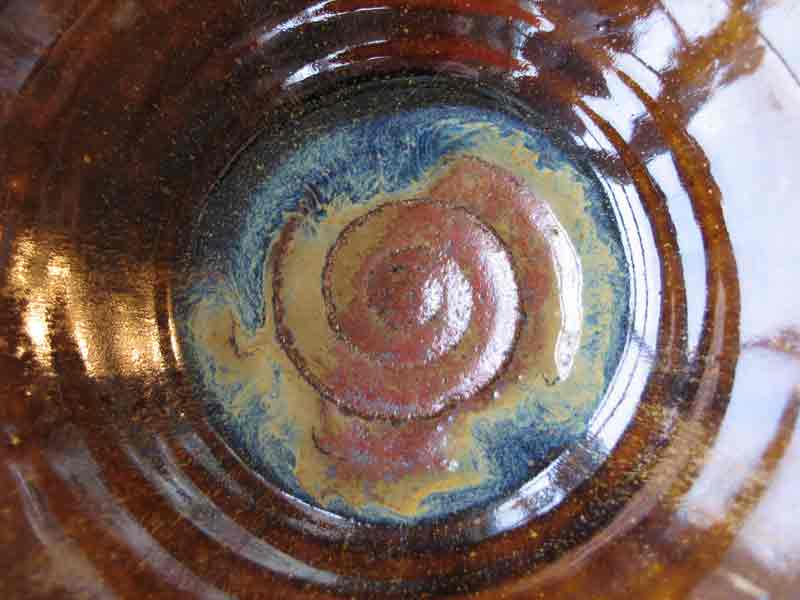
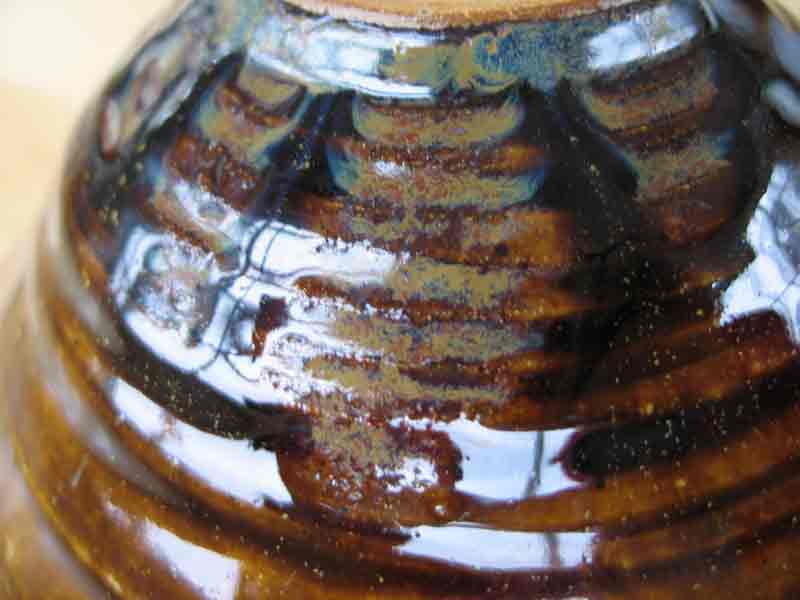
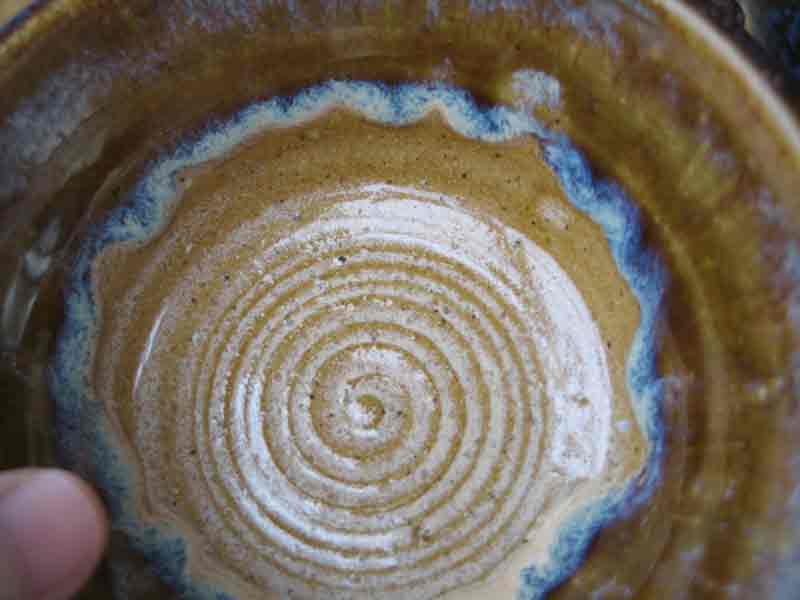
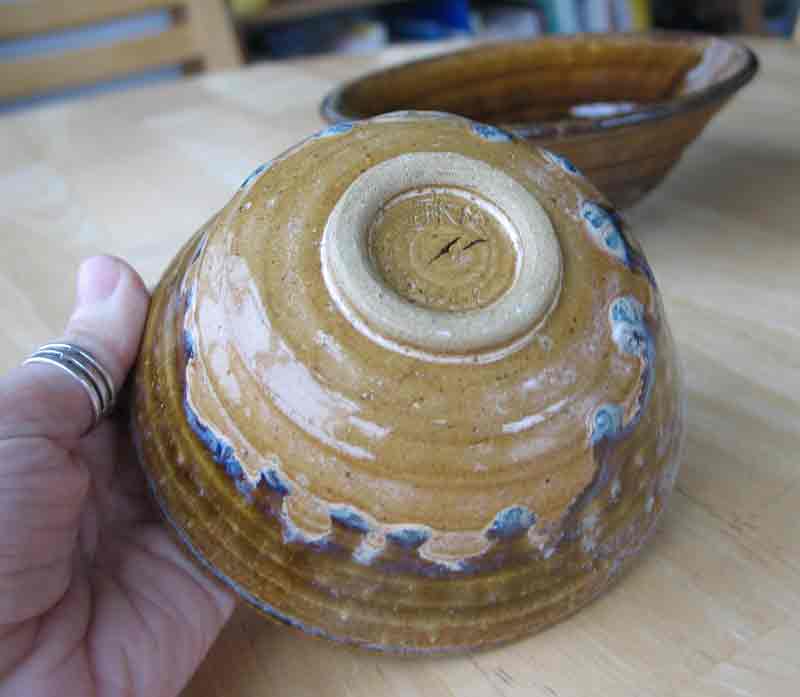
I have been exploring the use of overlapping glazes. Bold colors and goopy edges – so unlike me – Fun fun!


Posted in ceramics, DIY | 3 Comments

To stop your head from catching on fire

Flame retardants. They’ve been in the news a bit lately, so you’ve probably heard of them. But maybe you haven’t. After all, there are so many chemicals in the news these days. Flame retardants (FR) have been used for several decades now to manufacture products that resist catching and spreading fire. Good uses for this are plastic casings on electronic devices and wiring that may actually spontaneously catch fire. Less good uses are our clothing, carpets, and furniture.

Historically, I can see it not being a tremendously bad idea for household fabrics to contain FR – given that a lot of people smoked cigarettes in the home. Nonetheless, I’d say it’s still pretty much your own stupid fault if you let your smoking habit burn down your house. But when the flammability of synthetic fabrics came to the attention of the U.S. government, the Flammable Fabrics Act was born (1954) and fabrics that didn’t meet the grade began being coated with FR.

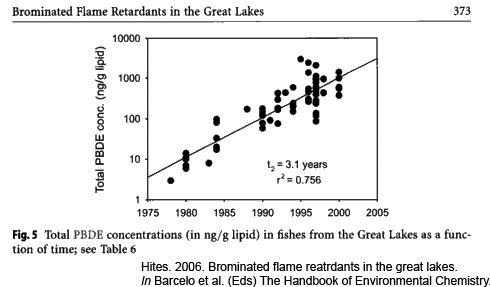
Brominated flame retardants (BFR) started being used during the 1970s. Prior to that, other chemicals were used to make things ‘fireproof’ – remember asbestos and PCBs? PCBs were banned in the U.S. (1978) when they were found to be toxic and started showing up in high concentrations all over the food web. That’s called bioaccumulation. Well, BFRs are the new PCBs. Structurally very similar to PCBs, it’s not a big surprise that they too bioaccumulate and are now found at high levels in things like breast milk (compare U.S. to other countries).

How do FR end up in our bodies? The data aren’t in yet but studies have shown that BFR are in our food, in the air, and can be absorbed right through our skin. Here’s an interesting statistic for you: in 1980 there were about 300 deaths due to clothing igniting, compared with about 100 in the YR 2000. Does that reflect an increased use of FR in clothing or, say, a reduction in smoking?

Another stat – the Bromine Science and Environment Foundation estimates that 280 lives/yr are saved by BFR for all fire-related deaths (4000/yr)…but at what cost? BFR are known mutagens, suspected carcinogens, and neurotoxins to boot – and we are all exposed to them, not just people who are afraid their clothing or couches are going to catch fire.

As Annie Leonard said in Story of Stuff, “We take our pillows, we douse them in a neurotoxin, and then we bring them home and put our heads on them for 8 hours a night to sleep? You’d think…we could think of a better way to stop our heads from catching on fire at night.”

NOTE: This and the previous blog ‘Are chemicals people too?’ were prompted by an editorial in the prestigious peer-reviewed journal Science, titled Toxic Dilemmas. It was exciting to see the use and toxicity of BFRs discussed at this level. Notably, Editor-in-Chief Donald Kennedy wrote “…the U.S. regulatory system for toxic industrial chemicals is not effective and is a threat to public health.”

Posted in Rants, Scientific | 5 Comments