After the rain…sprouts and birds

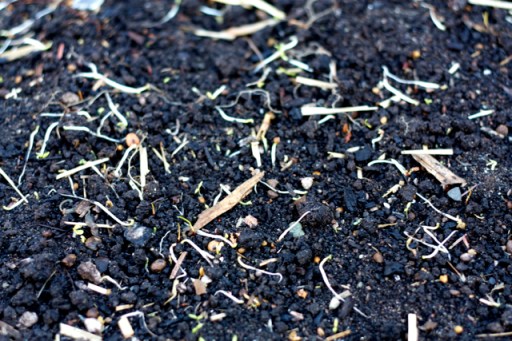
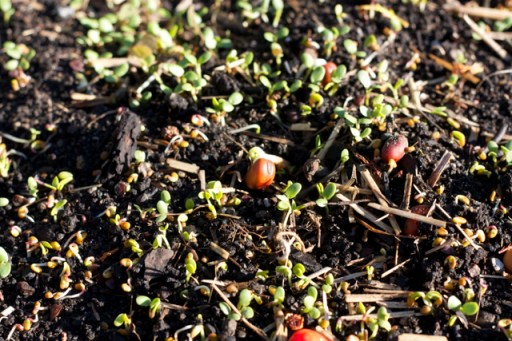
It has finally, finally, rained. And so the cover crops I sowed last week are diligently sprouting. Yay!

Cover crops sprouting

Crimson clover and fava beans sprouting for winter cover

However, several feet of each row have been picked over by birds – plucking off the tender new leaves and pulling the thin single rootlet out of the soil.  Damn.  I should have put a row cover over to protect them.  Can I never do this right?

Clover sprouts pulled out by birds

Clover sprouts pulled out by birds

Hopefully enough will sprout to cover the gaps. Put down thy roots, sprouts…

Posted in starting seeds, vegetable garden, winter | Tagged | Leave a comment

The Lesser-Known Spotted Asparagus Beetle

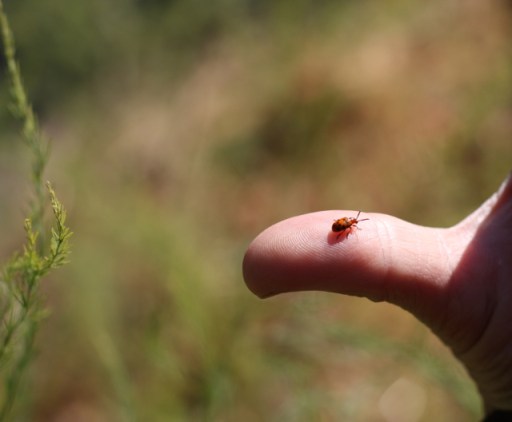
Spotted Asparagus Beetle duodecimimpunctata

Spotted Asparagus Beetle

I have been growing asparagus for 4 years. As reported previously, I replanted in 2011 and the current crop is a model of healthy asparagusness. Eager for the first sustainably edible spears, I regularly inspect my plants; pull weeds, note berries (on what should be 100% male plants – grrr), inspect bent spears for insect damage, and watch the lovely tall fronds wave in the wind.

Asparagus fronds

Asparagus fronds

This week for the first time I found a brilliant orange beetle hanging to a frond. At first glance, I assumed it was a lady beetle. Ever happy to welcome them to my garden, I peered closer. Not the round carapace of a lady beetle. I ran inside to get my ‘Good bug, Bad bug’ garden guide. Not Crioceris asparagi! Just a pretty beetle. Or was it? I had the same shape and size as the asparagus beetle. I decided to consult the all-knowing Internets.

Asparagus beetle

The common asparagus beetle, C. asparagi

Spotted asparagus beetles

Spotted asparagus beetles

Spotted asparagus beetle, C. duodecimimpuctata (because of its 10 spots), is a close relative of C. asparagi. Both adults feed on the spears and fronds, but the asparagus beetle is considered the more dangerous pest because its larvae can defoliate the fronds.  In contrast, larvae of the spotted asparagus beetle feed exclusively on the (extraneous) female berries – right, the ones my all-male clones are not supposed to have.

So! I picked off the berries and the adult beetles (chicken snack), will cut down and compost the dead fronds that provide overwinter habitat, and will remain vigilant when the spears appear next spring.  I do love knowing my enemies…

Posted in bugs, pest control, update, vegetable garden | Tagged | 1 Comment

Hoppity Hops!

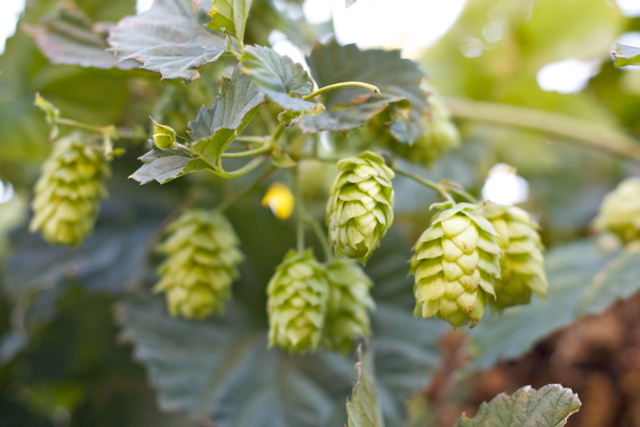
Hops at the pub

Hops growing outside the pub

Our local pub grows hop vines around its patio.  Scott, ever one to simply ask, inquired as to whether we could pick some.  Yes, but please limit yourselves to one grocery bag.  And so we found ourselves along the sidewalk and parking lot of the pub on a busy evening, picking hops.

Although I have long been interested in growing hops and making beer, this is Scott’s project.  He learned that hops are ready to pick when you squish them and they bounce back.  They should also make a squeaky sound.  Hee.

A bit tedious, it was, and I was self-conscious to pick right next to patrons on the patio (‘Hello, don’t mind me, I am just picking hops’).  At a heavy 3/4 of a grocery bag, we called it quits (and went into said pub for a beverage!).

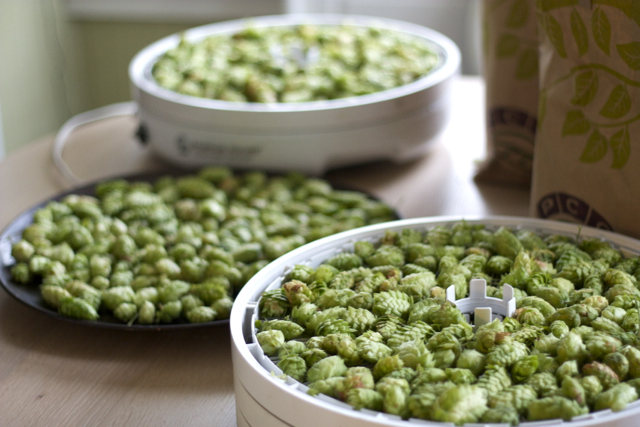
At home, I pulled out the dusty dehydrator and fired her up.  A few hours at the lowest temp setting and they were dry.  The house smelled delicious!  Fruity! Hoppy!  Like our favourite beer.

Dehydrating hops for beer

Dehydrating hops for beer

Two trays packed into one quart ziploc freezer bag.  Squish the air out for a quasi-vacuum seal and she’s ready to freeze.  Each quart bag is enough for one batch of beer (about 3 oz. dry weight).  Our 3/4 grocery bag yielded enough for 6 batches of beer.

dried hops ready to freeze

Dried hops ready to freeze

Let you know how our first batch goes!

Posted in flowers, Food preservation, harvest | Tagged , , | 2 Comments

Grape Juice

Agria grape

First grapes on the Agria

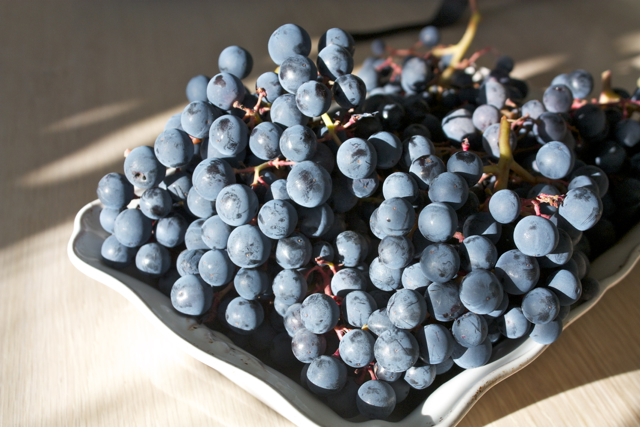
First grapes on the Agria vine we planted in Spring 2011.  As Raintree promised, it fruited early, growing luscious dark globelets.  I like sour fruit, so I have been tasting the grapes for a few weeks now.  Last week they reached a ‘grape’ taste with relatively little ‘sour’ left, so I figured it was time to harvest.  This was confirmed by Rooroo, the ‘bad chicken’, who keeps escaping over the fence and who had plucked all of the fruit from the lower clumps shortly after this self-pronouncement.

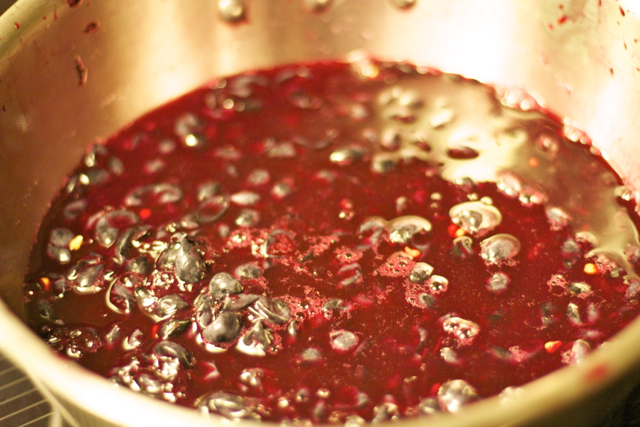
One small basket of fruit in the end.  I rinsed, plucked, and mashed the grapes, covered them with a bit of water and brought to a boil for 10 min.  After pushing the mash against a mesh strainer, I ended up with 2.5 c of juice.  What to do with such a small yield?  I stuck it in the fridge until I could figure it out.
Grape mash on the stove

Grape mash on the stove

I could have just drank it, but I wanted to preserve it for winter when there aren’t so very many delicious things to eat.  I decided I would can it in small volumes for use in mixed drinks.  [Other ideas??]

I passed the particulate-y juice through a double layer of muslin (now permanently stained a lovely lavender), brought it back to a boil, poured it into 1/2 pint jars (to within 1/4″), and processed them in a boiling water bath for 5 min.

Grape juice ready for the larder

Grape juice ready for the larder

So beautiful and, after photo ops, ready for the larder.  Resulta: four jars (diluting a little with water). I will open one per season – let you know how they turn out!

Posted in Canning, Food preservation, fruit, harvest | Tagged , , , | 3 Comments