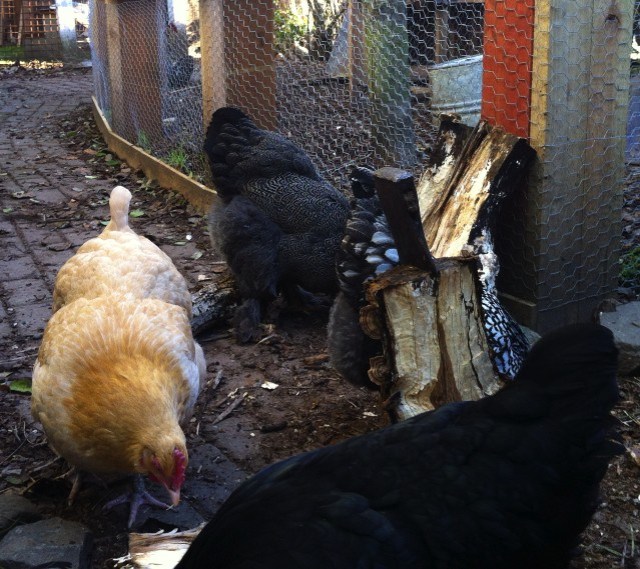
Chickens ‘helping’ split wood (aka eating bugs and wood chips)
Most of the time we heat our house from the electricity grid. Yawn, I know. Passive solar does the trick on rare, glorious sunny Seattle days, but the rest of the time we use an efficient ductless heat pump for the main room, radiant tile floor for the bathroom, and baseboards for the ‘tiny room’ where guests sleep and the ‘den’ where we sleep.
Our ancient baseboard heater wakes me through the night with its loud ‘click-Click-click-CLicK’, so lately I have been employing two tricks; one is a warmer comforter so we can turn the heat way down. The other is an evening fire.
There is a chimney in our main room, but it leads to the basement where there is no longer a coal-burning furnace. The fireplace in this old house is in a strange, sunken side room where we have chosen to spend our nights. But, heat rising and all, a sunken room is a great place to generate heat!
I grew up in a house in rural Ontario that was primarily heated by wood. The fireplace was in the basement and we moved our family room down there every winter to live closer to the heat. I have vivid memories of crouching in front of the open stove as I lit the fire after school, thinking about chemistry: energy of ignition, unstable equilibria. Lordy, science is cool. Or hot, in this case.
So I naturally think of wood as an alternative heating strategy. This fall I attempted to financially justify improving our fireplace with a wood stove insert or hearth stove. My primary motivation is improved air quality, both indoor and outdoor, but the direct wallet-output is a comfortable litmus test for home improvements.
Heating with wood is inexpensive, but electricity is dang cheap here. I calculated it would take 17 years to break even on the purchase of the stove! Plus it’s heck of a lot of work during the day to maintain. So maybe fires remain an evening luxury for the time being.
Two years ago, I researched wood to burn in our fireplace. I felt lucky when we got a good deal on a cord of white oak from eastern Washington. A bit wet when it arrived, it was still hard to burn after drying out and requires splitting to burn well. I have been using a sledge hammer and an old axe head to start things off, then a splitting wedge if that doesn’t finish the job.
I enjoy splitting wood, but I am sure there is a better way to do this. I can’t split very much at a time without pulling my lower back and damaging my grip. I cajole Scott into helping out, but I am a lot more motivated than he is to have fires. It is so delightful to fall asleep with the fireplace dancing on the ceiling.
How do you heat your house? Or how would you like to heat your house? If you split wood, what is your favourite method?
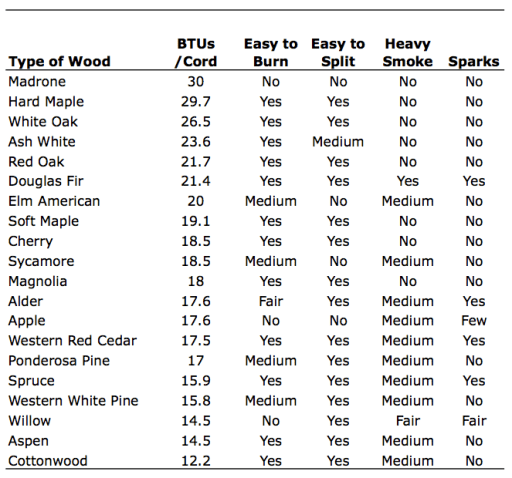
The energy and aesthetic value of burning different wood types








 Sustainable Scientist