
I have heard that chickens will attack and eat smaller vertebrates. Snakes most impressively, mice most commonly. We finally get to see how our chickens take care of their own vermin problems!
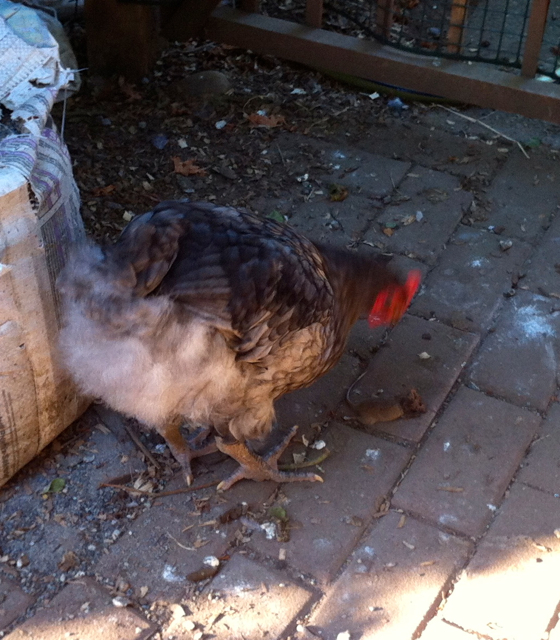
Blue rooster pecking at his mouse
I have heard that chickens will attack and eat smaller vertebrates. Snakes most impressively, mice most commonly. We finally get to see how our chickens take care of their own vermin problems!
Blue rooster pecking at his mouse
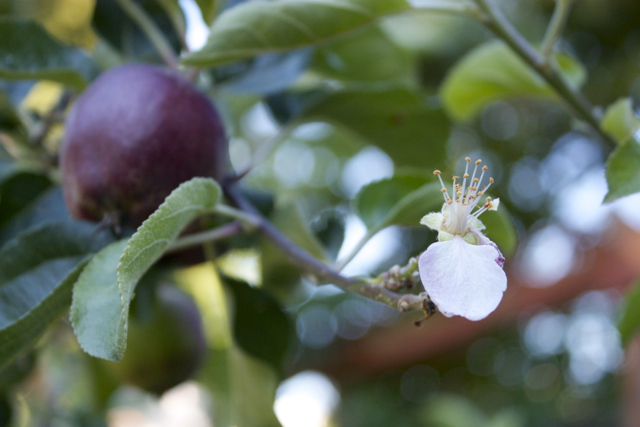
Pollinated flower on fruited apple tree
Do trees often bloom twice in the PNW or is this global warming at work? Is it really blooming twice or does our weather promote an extended blooming cycle like I read about in SoCal? Ideas?
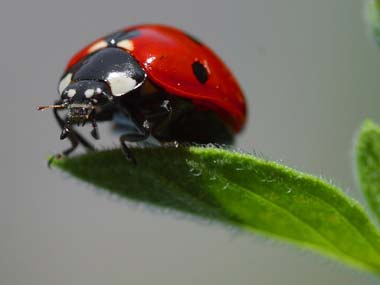
We all know what ladybugs (aka lady beetles) look like. Many of us gardener types also know that they are voracious predators of aphids – fascinating little sap-sucking pests of tender young plants and fruit trees.
This spring our Italian plum tree really caught the attention of aphids for the first time. At first I just noticed some curling leaves and began wiping the bright green aphids off the underside of the leaves. But I couldn’t keep up. The tree is 15′ tall and every young leaf was vulnerable. Eventually, sap was dripping from the upper leaves, covering the lower leaves and the back porch.
But the predators finally cued in and caught up. At first I noticed the bright yellow eggs on the underside of some leaves. Later, the little black-and-orange alligator larvae crawled on the leaves, on the trunk, on the ground. Finally, I noticed the strange orange-and-black pupa stuck to the leaves: larvae becoming adult ladybugs. Fascinating! I realized how if you scrunched up an alligator larvae you got something that looked halfway between the larvae and an adult ladybug.
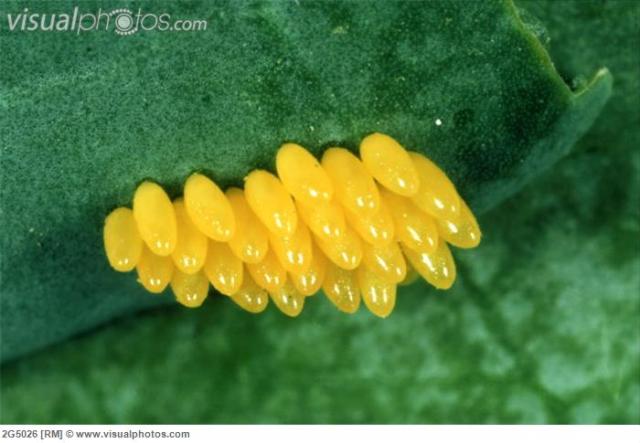
Ladybug eggs
Here are some photos on a plant near the aphid-infested hop vine:
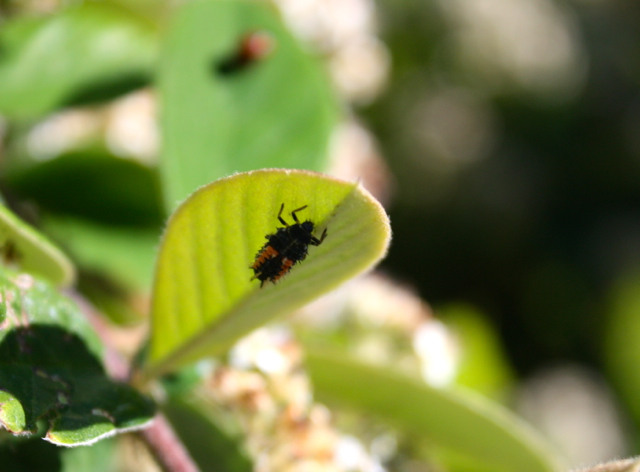
Ladybug larva on the underside of a leaf

The first step towards pupating – sticking one’s butt to the leaf

Individuals at multiple stages of pupating
For some great info on ladybugs – native and invasive – check out the Lost Ladybug Project

Little Sister trying to sleep in the nest box with her chicks at 6 weeks
Calamity Jane was a good momma hen. She taught, she warmed, she protected. And she had a re-integration plan. At week 1 CJ moved the family from the broody box to a nest box in the coop. At week 3 she moved the family to the lower perch to sleep, and at week 4 she was done with them.
Little Sister is more of a helicopter momma hen. At Week 6 she still finds choice morsels of food for her chicks, she still gets mad if you get too close to them, and she still tries to sleep with them in the nest box.
Although I am curious how long this will last, it is time to intervene. The box where they sleep is a poopy mess. And with CJ still brooding 24/7 in the third nest box (yes, *again*), one egg-laying nest does not hold the interest of our most fickle hen Baracka. Yesterday we discovered her secret egg nest. With only two laying hens right now, secret nests are particularly unappealing.
So I have cleaned the poopy nest box and locked Baracka in the coop so she can get over her furtive laying trysts. And tonight I will bar entry to the nest boxes, forcing Little Sister and her brood to seek higher ground – hopefully on the roosts.
Studying animal behaviour for a living and a hobby, I surprise myself by still learning very very basic things. For example, the range of behviours among individuals of a species. We know that humans are not all the same. Some like to be active, some like to sit on couches for hours on end doing very little. Some are very vocal and socially engaged, while others are quiet and shy. Some are very engaged parents, others have little interest in their offspring, or choose to forgo reproducing at all. For some reason, we expect other animals to not have complex and variable behaviours. We expect that fish are fish are fish, and chickens are chickens are chickens. Outside of dogs and cats, we expect other animals to have no personalities and to respond singularly to stresses. And yet the truth is that they are much more like us than like small clones of each other.
UPDATE: The next night I found LS sleeping in the next nest box over from her chicks. In the yard I saw her peck at one. Later that day, she layed an egg. The next night she was up on the roost and the chicks were on their own. Ha!

 Sustainable Scientist