Bees in the Trees

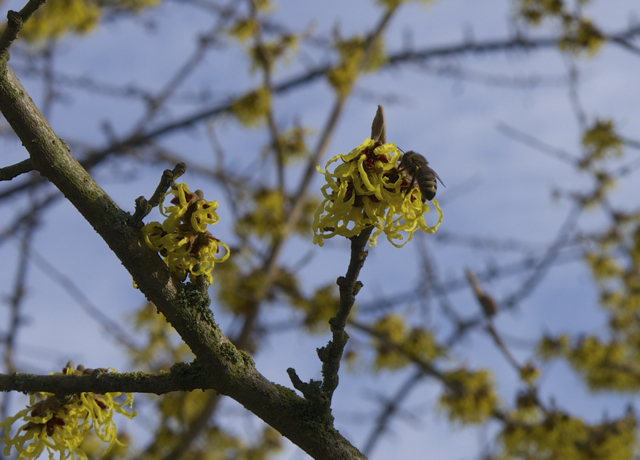
Winter honeybee investigating a witch hazel infloresence

Winter honeybee investigating a witch hazel inflorescence

After a week of gale winds and sideways rain, this morning was still, 50 F, and sunny.  So the bees came out.  I was anxious for the weather to calm down because the witch hazel has entered its first bloom since we got the bees (April 2013).

DSC00754

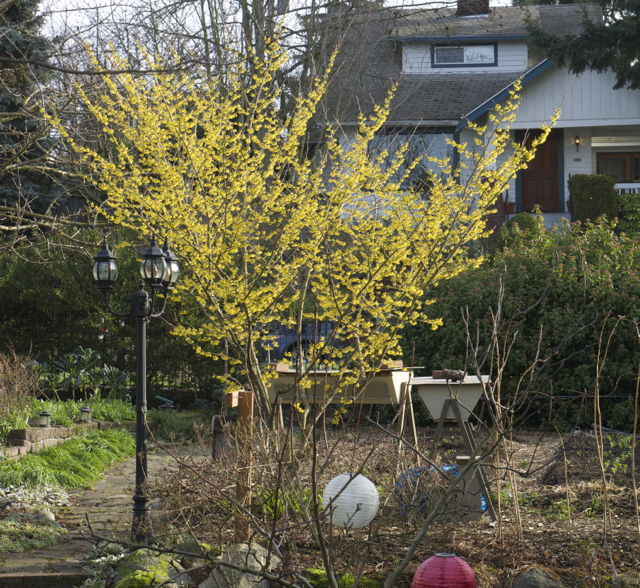
Giant witch hazel shrub at our hive site

The witch hazel tree,  technically a shrub, rises 15 feet directly behind and above the hives.  Its brilliant yellow blossoms are incredibly fragrant, but I see only anecdotal evidence on the interwebs describing honeybees as a pollinator.  If our honeybees like the witch hazel, it will make an awesome source of food and pollen in this season relatively barren of bee food.

DSC00763

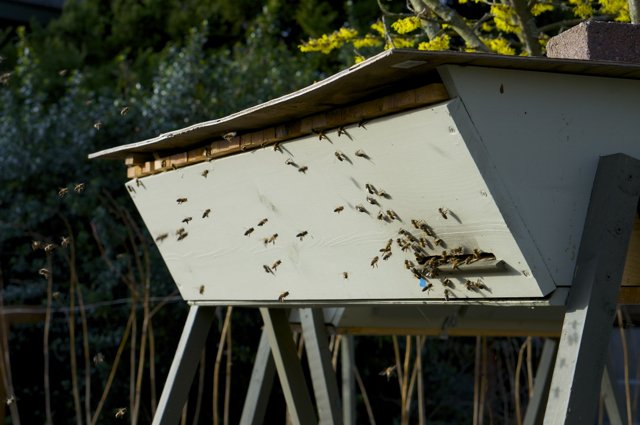
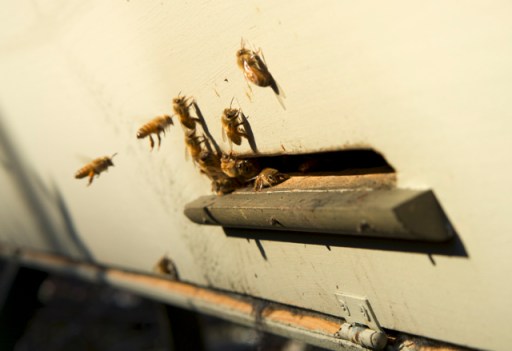
Carniolan honeybees out for a sunny winter morning excursion

What are your winter bees eating?

Posted in bees, honeybees, winter, witch hazel | 2 Comments

The Bees are Alive!

Italian honeybees on a January day in Seattle

Italian honeybees on a January day in Seattle

We haven’t seen much of the bees since we turned the corner into winter.  Last week Scott said, “I think the bees are dead”.  But Saturday was 46 degF and sunny.  For the few hours that the hives were in the sunshine, the bees were busy taking flights both near and far.  We saw many housekeeping bees bringing out the dead and field bees returning with light harvests of bright orange pollen.  I wonder where they found that??

Now that we have the bees, I look at my yarden, and indeed my neighbourhood, from a new perspective – that of a hungry bee.  Is there enough food for our urban bees?  NPR ran a story last summer about the shortage of bee food in London due to the enthusiasm for urban beekeeping.  The piece concluded that most American cities have not reached this imbalance.  My urban neighbourhood is rich in gardens – both ornamental and vegetable, with an abundance of deciduous (i.e. blooming) trees.  But pack enough bees into this neighbourhood and we would eventually run short on food.

Planting more bee-friendly landscaping is a great choice – whether or not the bees are tending to hungry.  So now in mid-winter when I think of Garden Year 2014 I think of what my bees will have to forage on and when.  As I consider new plants for my yarden, I think of what time of the year they would bloom and whether they provide bee food.  Not all flowering plants provide bee food.  For example, I learned last summer that the pollen of tomato flowers can’t be accessed by honeybees.  They need to be ‘buzz-pollinated’ by a stronger bee like a bumblebee.

Check out this Wikipedia table for which crop plants are pollinated by what type of bee:

http://en.wikipedia.org/wiki/List_of_crop_plants_pollinated_by_bees


Posted in animal behaviour, bees, honeybees, tomatoes, vegetable garden, winter | Tagged , | 3 Comments

Buzz-Kill at the Bee Hive: The importance of hive inspection

Italian hive drawn out to top bar 20 in 2013

Italian hive drawn out to top bar 21 in 2013

After inspecting our hives weekly during May and then monthly into mid-summer, we left the bees to their own bees-ness during the remainder of summer and fall. This was in part because they appeared to be doing well, in part it was also because we were so busy ourselves.
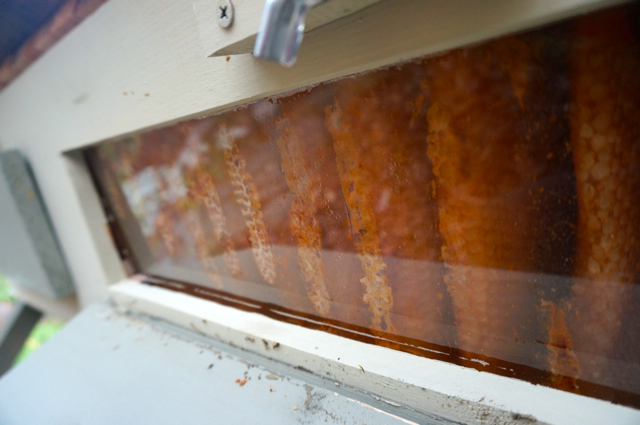
Bright orange combs, most firmly attached to the window

Bright orange combs, most firmly attached to the window

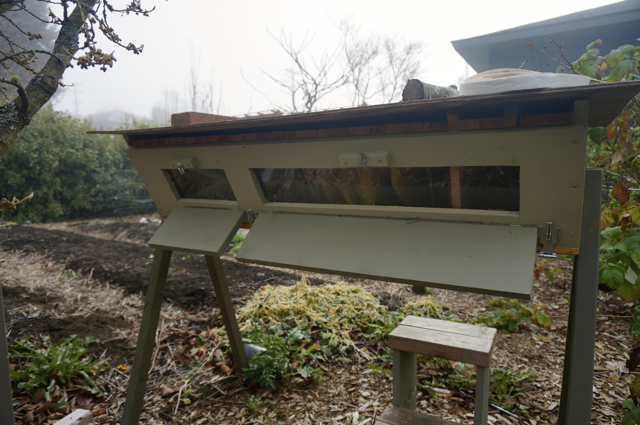
A few weeks ago a visitor who had yet to see our hives prompted us to peek through our observation windows. As the little shutter came open on the Carny hive, we found about 20 dead bees nestled against the window pane. Oh? Next I was alarmed to notice a large opening to the hive at the corner of the window and a big wide gap between the window and frame that the bees had filled with orange-red propolis.
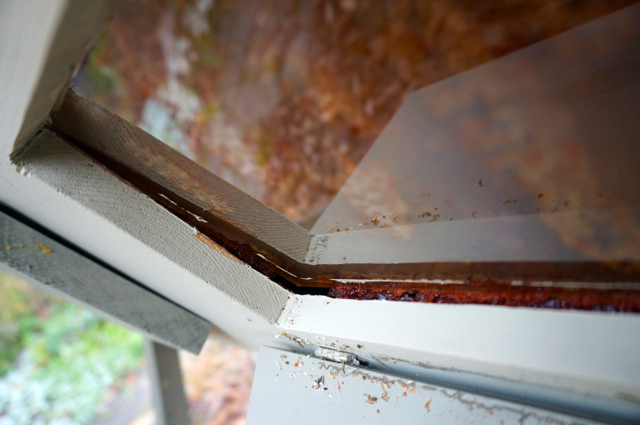
Window pulled away from frame, with proposis glue and new entrance hole

Window pulled away from frame, with proposis glue and corner hole.  Notice  paint line from when it was flush with the frame.

The bees in the Carny hive are prone to attaching each comb to the side walls – despite the steeply angled side walls meant to prevent exactly this behaviour. (The Italians tend not to do this). We figured that the window was slowly pulled inward as the combs contracted in the cooling fall weather.  The glue holding the window to the frame eventually failed under the tension, allowing an air gap to begin forming. The bees have been working hard (poor things) to fill this gap, but the spot at the corner was probably too large to fill.
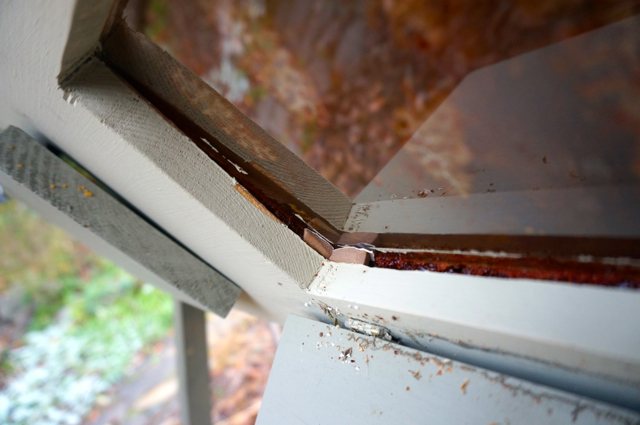
Hole plugged with foam

Hole in frame plugged with foam

I wonder how the bees are faring?  We did not harvest any honey and hope they have enough to tide them through the winter.  Time to look up what-next for Winter 1 of our top bar hives.

Comments and suggestions welcome!

Posted in bees, top bar hive, winter | 1 Comment

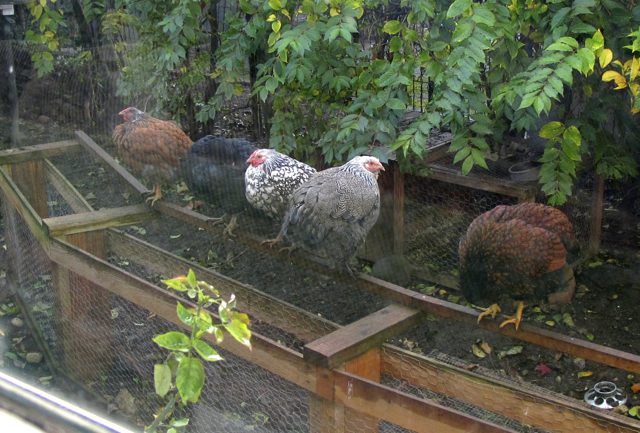
Watching Chicken TV in Winter

LIttle Sister, Baracka, Blanca, Calamity Jane, and Red perched on the chicken food fence

LIttle Sister, Baracka, Blanca, Calamity Jane, and Red perched on the chicken food fence

We don’t see the chickens as much in winter. It’s just too cold and rainy (duh – Seattle!) to spend much time outside with them. But since I built the chicken food fence, there is the added benefit of watching them perch from the living room window. I curl up on the couch (under the heat pump) and watch. They preen, they nap, they squabble, they watch me as I watch them. I can track their molting, catch subtle shifts in their social hierarchy, and marvel at their amusing interactions with their world. If you have a small flock of chickens, I highly recommend a spot in your house from which you can comtemplate them.

Posted in animal behaviour, chicken behaviour, chickens, food fence, winter | Tagged | Leave a comment