Cliche as it is, I present you with the Circle of Life (can you hear Sir Elton John?)
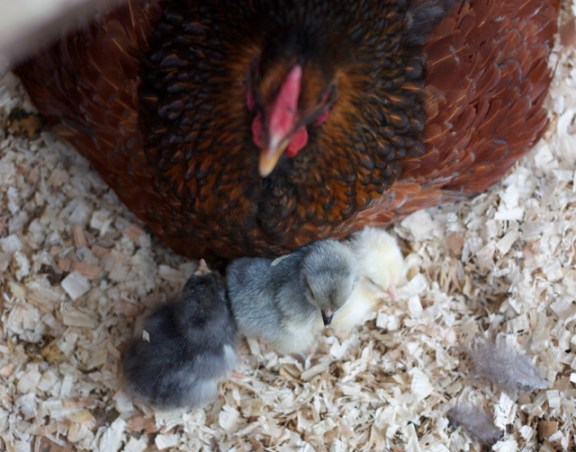
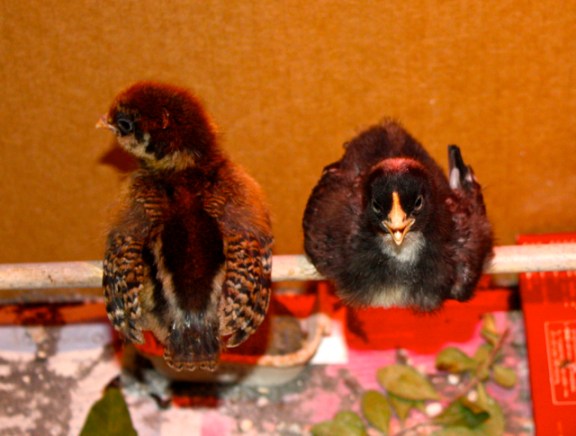
Blue, Lavender, and Salmon Chicks hatched to Little Sister, the sympathy brooder, on May 26 2013
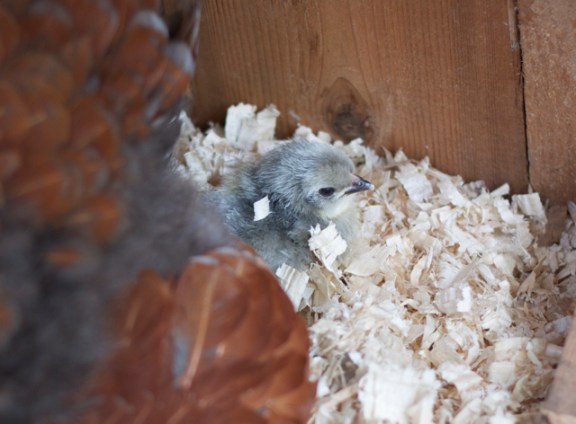
After 21 days of diligent brooding, Little Sister hatched three chicks on May 25. Three wee damp fuzzballs so small they sit within the palm of my hand. One lavender orpington, one blue orpington, and one salmon faverolle. I had to help the blue hatch, but we appear to have three healthy chicks snuggled under momma’s downy feathers against this cool, rainy spring weather.
Lavender Orpington Chick
PS. Can anyone name the poem that the title comes from?
This morning the hens were making an awful racket. Calamity Jane would not get down from the top roost of the coop. Later in the morning the hens and chicks were all up on the outdoor roosts and CJ would not let up on the calling. That is when I found the trail of feathers leading to the remains of Greta.
We can’t be sure what got her, but the educated guess leads to coons. We have been keeping the door of the coop open 24/7 for 6 months now. Greta was the only hen on the lower roost last night. Yesterday our neighbour told us he’d seen coons in the big tree in our yard again. Bingo.
A month ago we lost Rocky and the Golden Chicken. The little inner door on our coop swung shut during a wind storm while we were in Moab. Although they were not the only hens caught inside, they were the oldest. Rocky had actually been suffering some internal injuries and her death following the confinement may have been coincidental.
So we seem to inadvertently be making room for the new chicks we are raising. Let’s hope the carnage stops there. It would be nice to keep a few layers around, and its been grizzly burying dead chickens that I have raised.
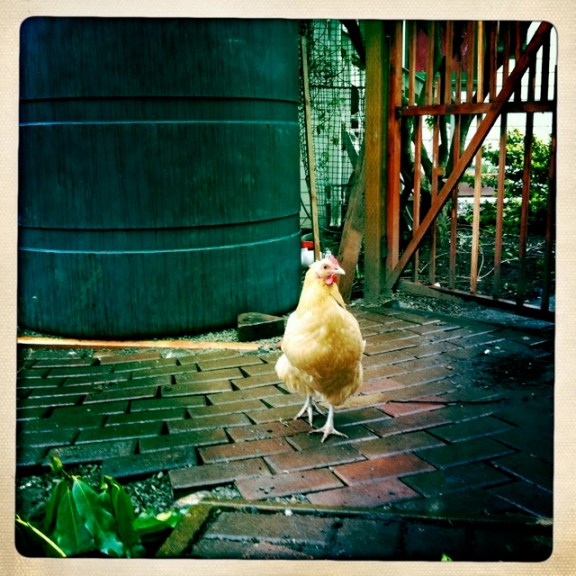
The Golden Chicken (Buff orpington) was born in 2008. We adopted her in 2011. She had a rough 6 months adapting to the flock – most of which time she spent bald at the attentions of the head hencho Rocky. She eventually adapted and regrew feathers to become the beautiful golden chicken you see here by the cistern
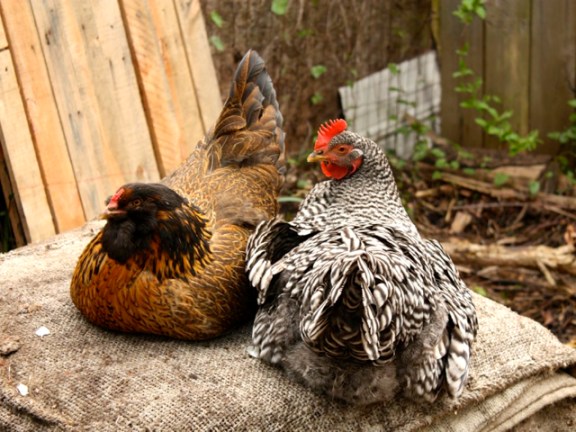
Greta (Ameraucana) and Rocky (Barred Rock) we hand-raised as our first batch of chickens in 2008. Greta was a clumsy, dumb bird. A happy gamma, she was an excellent layer of enormous eggs. Rocky was head hen for most of her life. She liked to jump on my arm and be petted
Greta and Rocky as week-old chicks in our first broody box
I am talking about flies. Fat black flies that emerge from moist chicken poop. The first year we had chickens, they ranged freely throughout our yard. Their freely dropped pooplets bred flies. Flies are annoying. And in sufficient numbers, flies draw wasps.
Wasps prey on flies, but they’re not that good at it. When I was writing my dissertation on the ecology of predator-prey systems, I would sit outside and watch the flies buzz around a poophill. I am not sure I ever saw a wasp capture a fly, but the Ecology of Fear was evident.
Briefly, a predator has a certain impact on the abundance of its prey population by killing individual prey, but its larger impact is through behavioural control. Fear of the predator alters the behaviour of the prey. Increased vigilance and shifts in the use of space by the prey reduce their chance of being captured and killed, but also reduces fertility. And this impact is much greater than the relatively few individuals actually captured by the predators.
In the case of the flies, the furious buzzing about the poophill was severely affected by the presence of the wasp hovering on the outskirts and making fumbling attempts to capture the flies that landed on the poophill. A fly is hard to catch mid-air (dynamic 3D), but a much easier target once it lands (static 2D). And in order to make use of the poophill that so attracts them, flies much land. You see how this works.
Alas, although a fascinating example of the ecology of fear, the wasps, and the poophills they frequented, were unwelcome at our outdoor BBQs. The chickens were confined to their run where there was a better chance they would turn over their little poophills whilst scratching in the dirt.
We tried fly tape, but took it down when we found dead songbirds stuck to it (sad). I took to dusting moist poophills with diatomaceous earth when the weather was nice. This doesn’t prevent flies from frequenting poophills, but might prevent larvae from emerging.
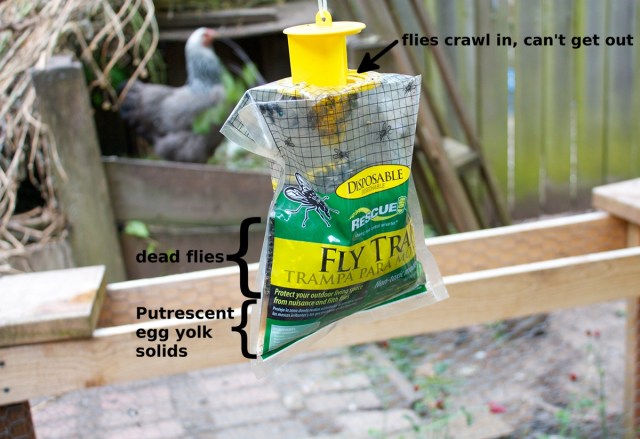
Finally, I found some organic fly traps that actually work. The RESCUE fly trap is very simple. This toxicologist is always suspicious of insect-killing devices, but the active ingredient in the Rescue trap is ‘Putrescent egg yolk solids’ – how appropriate.
Rescue Fly Trap in Action
These traps are disposable. Once filled with flies (eeeewwwww), you shut the trap door and send it to the landfill. Very convenient, but not very ‘sustainable’ of me. I have my eye on the Rescue reusable fly trap where you just purchase the egg solid powder and add water. Of course, we could start putrefying our own egg solids. There, now I have offically grossed out every last one of you… 😉
Finally, a video of the trap in action that will fascinate and/or utterly repulse you!
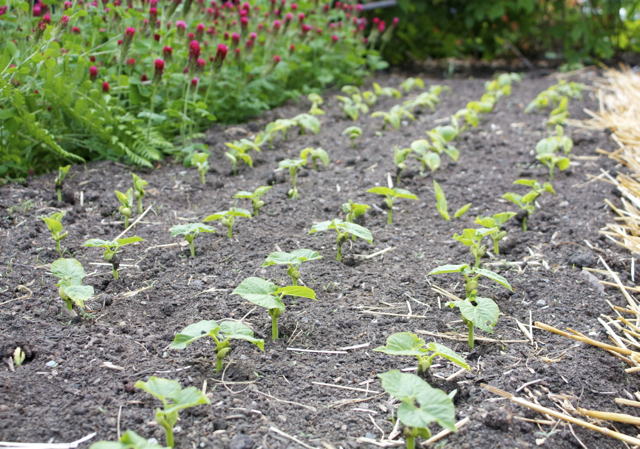
Regular watering until germination leads to fast-emerging, healthy seedlings
Yes, watering makes all the difference. Last year I planted bean seeds without bother to water them (It’s going to rain tomorrow or the next day anyways…). But it doesn’t. Or not enough. By watering the seeds at planting, and regularly until they pop up, the seeds absorb the water they need and germinate as quickly as soil temperatures will allow. For beans this is 75-80 F and takes about 7 d. With ideal temperatures and sufficient water, these bean plants started popping up at Day 5. The shortest germination time means the healthiest seedlings – less insect damage and more resources left in the cotyledons to contribute to a strong start.


 Sustainable Scientist